Is Faux Wood or Real Wood More Cost-Effective Long-Term?
October 23, 2026
Upfront Price Is Only Half the Story
When homeowners compare faux wood and real wood shutters, the conversation often starts and stops at the upfront price tag. But cost-effectiveness over ten or twenty years depends on more than the number on the initial quote.
For homeowners in Lexington, KY weighing these two materials, looking at long-term durability and maintenance costs alongside the sticker price gives a much clearer financial picture.
A material that costs less today but needs more frequent repairs or replacement can end up costing more overall than a slightly pricier option that holds up with minimal upkeep.
This guide walks through the upfront pricing, durability, and maintenance factors that together determine which material actually delivers better value in the long run.
Comparing the Two Materials Over Time
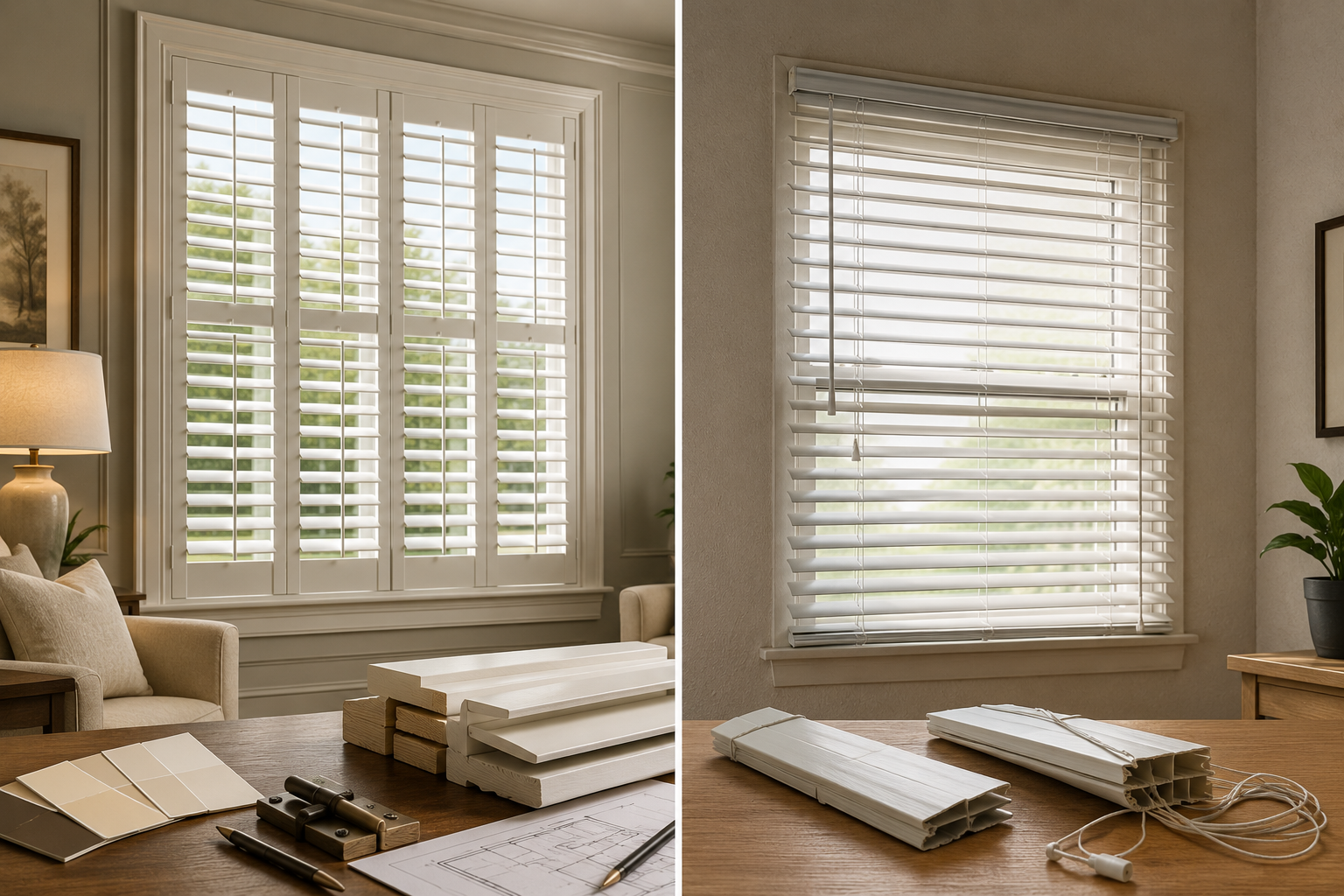
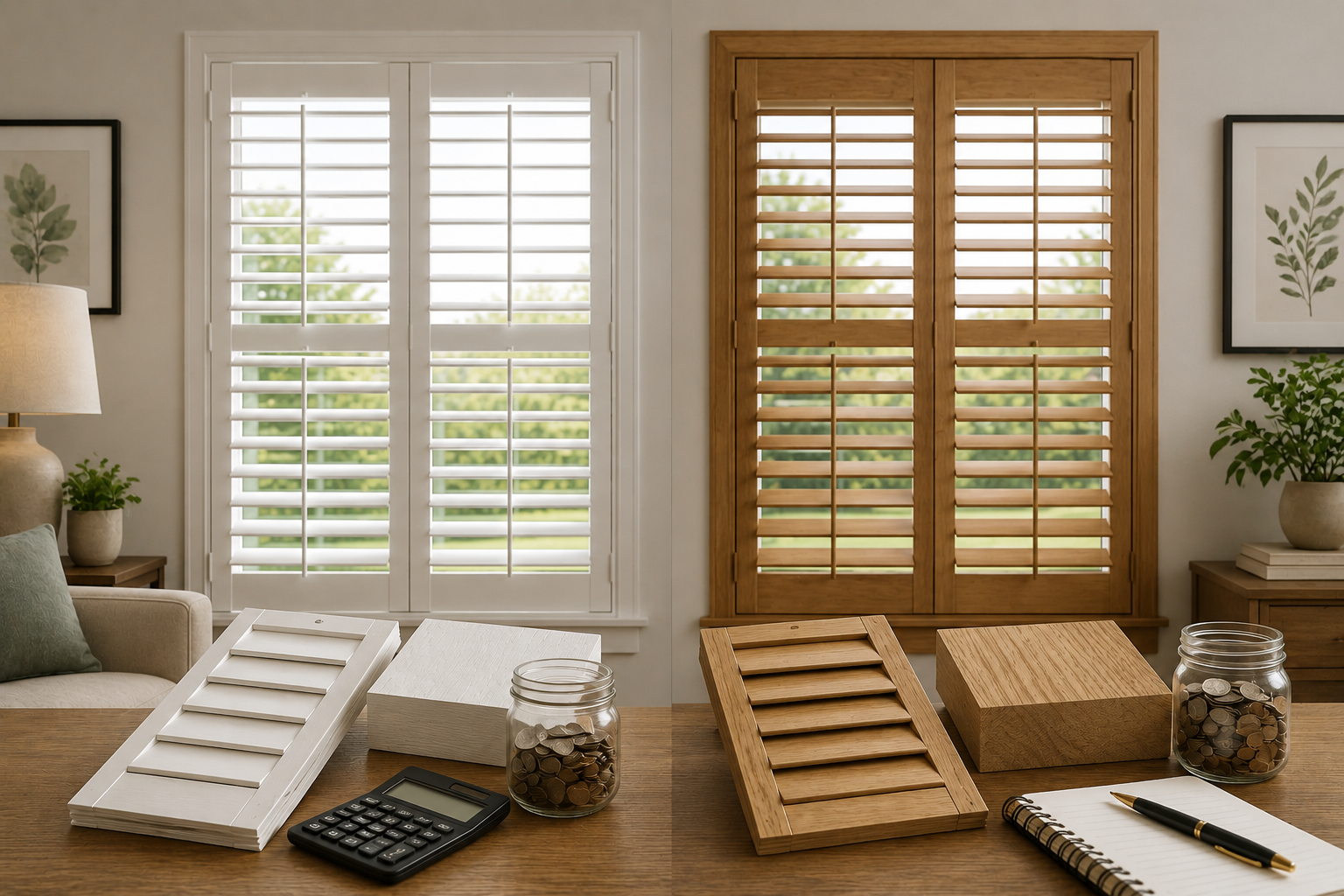
Faux wood shutters are typically made from engineered composite or PVC materials designed to mimic the look of real wood at a lower price point. Real wood shutters are milled from solid hardwood, offering a natural look and feel but at a higher initial cost.
Over a 15 to 20 year ownership period, the total cost of each option depends heavily on how well it holds up to daily use, humidity, and sunlight exposure in your specific home.
Looking at total cost of ownership, rather than just the initial invoice, is the clearest way to compare these two materials fairly.
With that framework in mind, it helps to walk through each cost driver individually, starting with the upfront price difference between the two materials.
Upfront Cost Comparison
The table below outlines typical starting price differences between the two materials. These figures can vary based on window size and finish selected.
| Factor | Faux Wood | Real Wood |
|---|---|---|
| Average cost per window | $150 to $350 | $300 to $700+ |
| Weight | Heavier, sturdy panels | Lighter, natural material |
| Available finishes | Limited stain-like colors | Wide range of stains and paints |
| Typical warranty length | Often lifetime on the material | Varies by manufacturer and finish |
Durability in Lexington, KY Humidity and Sunlight
Climate exposure affects each material differently over time, and this is one of the most important factors in a true cost comparison.
Humidity Resistance
Faux wood holds up well in high-moisture areas like bathrooms and kitchens, resisting warping, cracking, and swelling that can affect solid wood in similar conditions, which matters in the humid summers common to Lexington, KY. Real wood in these same rooms may need more frequent inspection to catch early signs of moisture damage.
Sunlight and Fading
Real wood can be more prone to fading or drying out in rooms with intense, direct sunlight over many years, while faux wood finishes are generally engineered to resist UV fading for longer periods, an important factor for south-facing rooms in Lexington, KY homes.
Homeowners with large picture windows in bright rooms often see this difference most clearly after several years of use.
Maintenance Requirements
Ongoing care needs differ meaningfully between the two materials, and these differences add up significantly over a decade or more.
- Faux wood typically needs only occasional dusting and wiping
- Real wood may need periodic refinishing, oiling, or repainting
- Faux wood resists moisture damage without special treatment
- Real wood benefits from climate control to avoid warping over time
- Real wood may require touch-up work if scratched or dented over the years
- Faux wood hardware rarely needs adjustment once properly installed
Longevity and Value Over Time
Both materials can last two decades or more when properly cared for, but faux wood tends to require less ongoing investment to maintain that lifespan. Real wood, when well maintained, offers a premium look that some homeowners value for its impact on overall home character.
When you total upfront cost, maintenance, and expected lifespan, faux wood often comes out as the more cost-effective option for high-moisture rooms in Lexington, KY, while real wood can still be worthwhile in living spaces where its appearance is a priority.
The right answer often is not one material for the whole house, but a deliberate mix based on how each room is used and how much long-term upkeep a homeowner is willing to take on.
Frequently Asked Questions
A few additional questions come up often once the basics of this topic are covered.
Can faux wood shutters be repainted like real wood?
Most faux wood shutters come in factory-finished colors that are not designed to be repainted, unlike real wood which can be refinished multiple times. This is worth considering if you expect your color preferences to change down the road. Real wood offers more flexibility if you like to update your decor periodically. Choosing a neutral faux wood finish upfront can help avoid this limitation later.
Do faux wood shutters affect home resale value the same way real wood does?
Real wood is sometimes viewed as a slightly higher-end feature by buyers, though both materials are generally considered a value-adding upgrade. The difference is usually minor compared to having no custom shutters at all. Either material is likely to be seen favorably during a home sale. Condition and proper installation typically matter more to buyers than the specific material chosen.
Is one material significantly heavier to operate day to day?
Faux wood panels are somewhat heavier, but well-installed hardware is sized to handle that weight without affecting ease of use. Most homeowners do not notice a meaningful difference in daily operation. Proper installation is the key factor in smooth, effortless operation either way. Poorly sized hardware, not the material itself, is usually the real cause of a stiff or sticky panel.
Do warranties differ between the two materials?
Warranty terms vary by manufacturer, but faux wood products often carry longer warranties due to their resistance to warping and moisture damage. It is worth comparing warranty terms directly during a consultation. Ask specifically about coverage for humidity-related damage if you are considering real wood for a moist room. Reading the fine print on warranty exclusions can prevent surprises later.
Can the two materials be mixed within the same home?
Yes, many homeowners choose faux wood for bathrooms and kitchens while using real wood in living rooms and bedrooms for a blended approach. This lets each room get the material best suited to its conditions. It also allows for a phased project if budget requires spreading out the investment. A consultant can help plan which rooms to prioritize first.
Conclusion
Neither faux wood nor real wood is universally more cost-effective; the right choice depends on the room, the climate exposure, and how much ongoing maintenance you are willing to take on. For most high-moisture spaces, faux wood tends to offer the better long-term value, while real wood can still make sense elsewhere in the home.
Commonwealth Shutters and Blinds can help you match the right material to each room in your home for the best long-term outcome. A room-by-room recommendation is generally more useful than a single blanket choice for the whole house.