Do Larger Windows Really Double Your Shutter Costs?
October 2, 2026
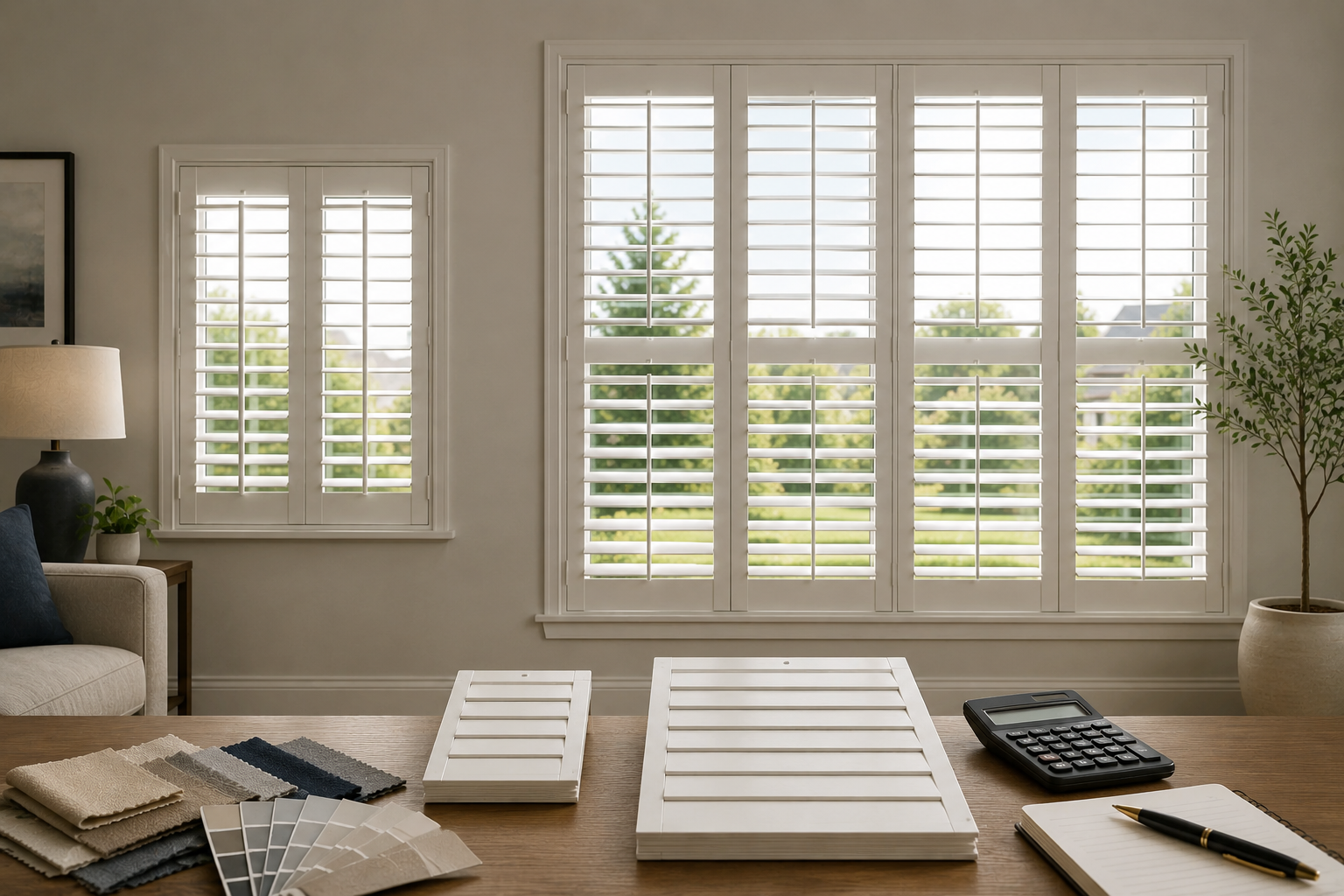
Bigger Is Not Always Twice the Price
It is a common assumption that a window twice the size of another will cost twice as much to fit with custom shutters. The real relationship between window size and shutter cost is more nuanced than a simple multiplier.
For homeowners in Lexington, KY budgeting for larger picture windows, bay windows, or sliding glass doors, understanding how sizing actually affects pricing can prevent both overestimating and underestimating a project cost.
This is especially useful to know before requesting quotes, since a rough per-square-foot estimate rarely tells the full story for unusually large or oddly shaped openings.
The sections below break down exactly which physical factors drive cost as size increases, along with a general sense of how much each one adds to a project.
How Size Actually Factors Into Pricing
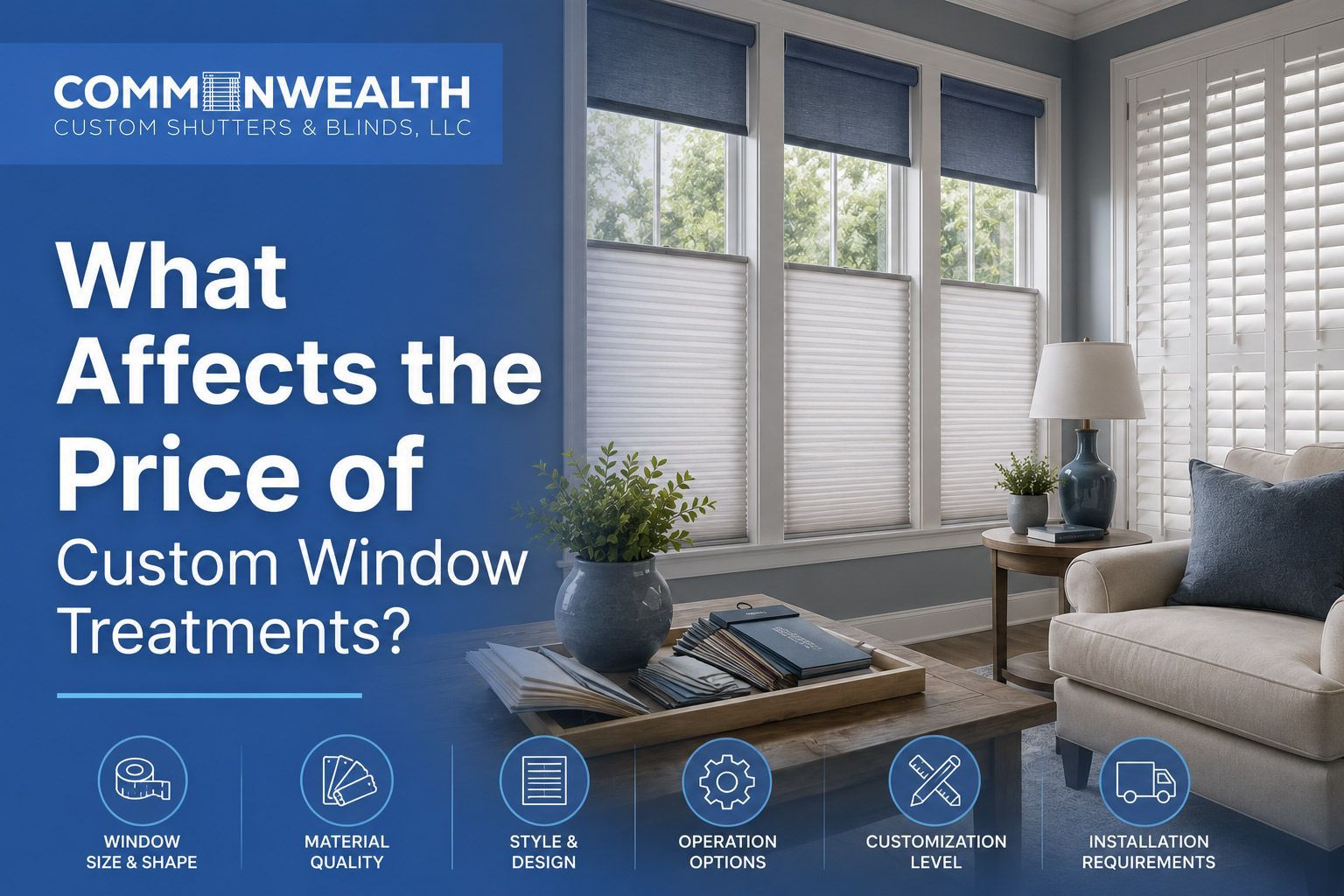
Shutter pricing is generally based on square footage, but it is not a flat linear rate. Larger openings often require additional structural components, more panels, and reinforced hardware that a small window simply does not need.
That means a window twice the width of another might cost more than double in some cases, or less than double in others, depending on how the extra size is handled during fabrication.
The clearest way to understand this is to look at what actually changes physically as a window gets larger, rather than assuming the price simply scales with the glass area.
Once you see how panel count, material waste, and reinforcement each contribute independently, the final number on a quote for a large window becomes much easier to make sense of.
Panel Count and Track Complexity in Lexington, KY Homes
Larger openings often require design changes that add cost beyond simple square footage, something local installers see often in Lexington, KY. These changes are usually necessary for the shutters to operate properly rather than optional upgrades.
- Additional panels to keep each section a manageable size and weight
- Center mullions or support posts for very wide openings
- Multi-track systems for sliding doors or expansive window walls
- Reinforced hinges to support the added weight of bigger panels
- Additional mounting brackets to distribute weight evenly across the frame
- Wider top and bottom rails to keep large panels rigid over time
Material Waste and Custom Cuts
Larger shutters require larger sheets of raw material, and cutting bigger panels from standard stock can create more waste than cutting several smaller panels. That waste factor is built into the pricing for oversized openings, and it shows up consistently in quotes for larger homes around Lexington, KY.
In some cases, a very large window may also require sourcing wider raw material stock, which comes at a premium compared to standard widths used for typical residential windows.
Fabricators also have to account for the risk of material defects appearing in larger cuts, which can mean ordering extra stock as a buffer, a cost that is factored into oversized shutter quotes.
Reinforcement Needs for Large Spans
As shutter panels get larger, they need additional internal reinforcement to prevent warping or sagging over time. This is especially relevant for homes in Lexington, KY, where seasonal humidity swings can affect wood and composite materials.
That reinforcement adds material and labor cost, but it is what keeps oversized shutters operating smoothly for as many years as smaller ones.
Without this added reinforcement, a large panel is far more likely to sag on its hinges over time, which can cause operational issues and a shorter effective lifespan than the investment should provide.
A qualified fabricator will always factor this reinforcement into an oversized quote rather than treating it as an optional add-on.
Cost Comparison by Window Size
The table below shows a general sense of how pricing tends to scale across common window size ranges. Actual pricing will still depend on the specific material and configuration chosen.
| Window Size Range | Typical Panel Count | Relative Cost Increase |
|---|---|---|
| Standard (24-36 in wide) | 2 panels | Baseline |
| Large (37-60 in wide) | 2 to 4 panels | 1.5x to 1.8x baseline |
| Extra-large or sliding door | 4+ panels, multi-track | 2x to 3x baseline |
Frequently Asked Questions
A few additional questions come up often once the basics of this topic are covered.
Do bay windows cost more than a single large window of the same total width?
Yes, bay windows typically cost more because each angled section requires separate measurement, fabrication, and mounting hardware. The angles also make installation more time-consuming than a flat opening of similar size. This makes bay windows one of the more expensive shutter projects on a per-square-foot basis. Getting an in-person measurement is especially important for accurate bay window pricing.
Can oversized windows use the same louver size as standard windows?
Larger louvers are often used on bigger panels to maintain proportion and airflow, which can slightly change the per-panel cost. Matching louver size to panel size also helps the finished shutter look properly proportioned. A consultant can recommend the right louver size during your measurement visit. Getting this detail right also affects how much light and airflow the shutters allow once installed.
Is there a size where shutters are no longer a practical option?
Extremely large openings sometimes call for alternative solutions like sliding shutter panels or motorized tracks rather than standard hinged shutters. A consultation can help determine when an alternative configuration makes more sense. These alternatives are usually still less expensive than leaving an oversized window untreated. They can also offer better long-term performance than forcing a standard hinged design onto a very large opening.
Does window height affect cost as much as width?
Height matters too, particularly for very tall windows, since taller panels also require additional reinforcement to prevent sagging. In many cases, height and width increases compound each other in the final quote. Very tall, wide openings often see the largest cost increases of any window type. A measurement visit is the best way to get an accurate number for unusually tall windows.
Can a large opening be split into smaller shutter sections to save money?
In some cases, splitting a very wide opening into multiple standard-sized sections can reduce cost compared to custom oversized panels. This approach works best when the visual break between sections fits the room's design. A consultant can advise on whether this approach suits your window layout. It is worth discussing this option directly during your measurement visit.
Conclusion
Larger windows do increase shutter costs, but not through a simple doubling formula. Panel count, reinforcement, and material waste all play a role in how pricing scales with size, and each factor moves independently rather than in a fixed ratio.
If you have an oversized window or sliding door in your home in Lexington, KY,
Commonwealth Shutters and Blinds can provide an accurate, itemized quote based on your specific opening rather than a rough estimate. That level of detail is the only reliable way to know what a large window project will actually cost.