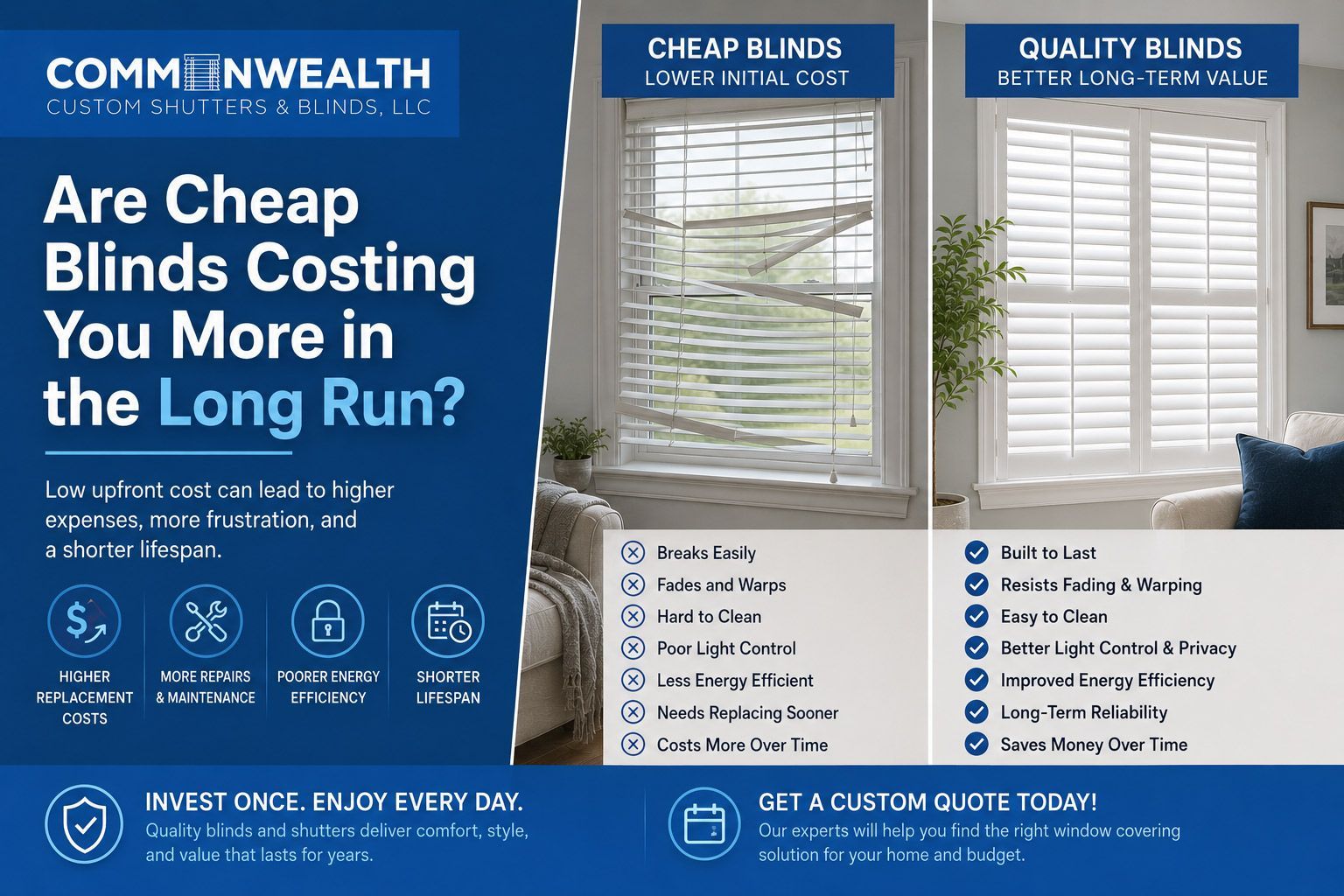
Are Cheap Blinds Costing You More in the Long Run?
August 30, 2026
The Window Treatment Decision That Seems Simple but Isn't
Walk into any home improvement store and you can leave with blinds for every window in your house for a few hundred dollars. It feels like a reasonable solution — fast, functional, and easy to justify when bigger renovation costs are competing for the same budget. But for homeowners in Lexington, KY treating their home as a long-term investment, the true cost of that decision reveals itself slowly, in ways the price tag at the register never suggested.
This is not a case against affordable window treatments as a category. There are situations where budget blinds are the right call, and this guide addresses those honestly. But for most homeowners in a home they plan to live in and maintain, the economics of cheap blinds — examined over a realistic time horizon — tend to look very different at year ten than they did at point of purchase.
How Cheap Blinds Fail Over Time
The failure of a low-cost blind is rarely sudden. It is gradual, incremental, and easy to ignore until the accumulated damage becomes impossible not to see. Economy blinds typically produce the following failure patterns over three to five years of normal use.
- Slats warp at the edges from repeated touch and from heat near the glass, making the blind unable to close flat or lie straight when open
- The tilt rod mechanism loosens progressively, causing slat angles to be inconsistent across the width — some angled, some flat — even after adjustment
- The lift cord frays at the points of highest friction, weakening until the blind can no longer be raised smoothly or held at a fixed height
- The finish fades unevenly, with slats closest to the sun bleaching to a lighter tone than those in shadow, producing a visibly mottled appearance
In Lexington, KY, where south- and west-facing windows receive intense UV exposure across long Kentucky summers, this timeline often compresses. A product rated for five years of normal use may look worn after two in a room with significant afternoon sun.
The Real Cost Comparison Over 20 Years
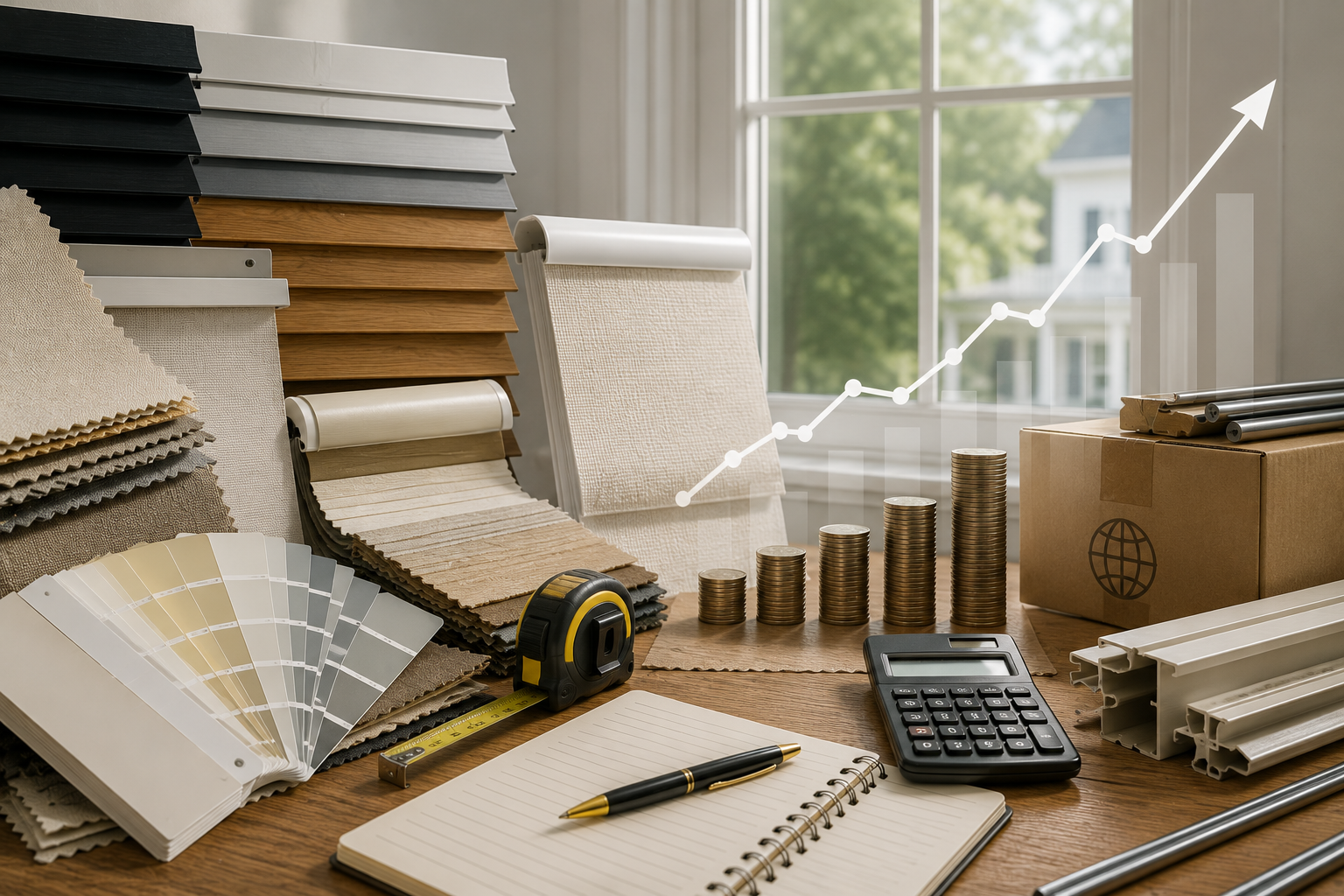
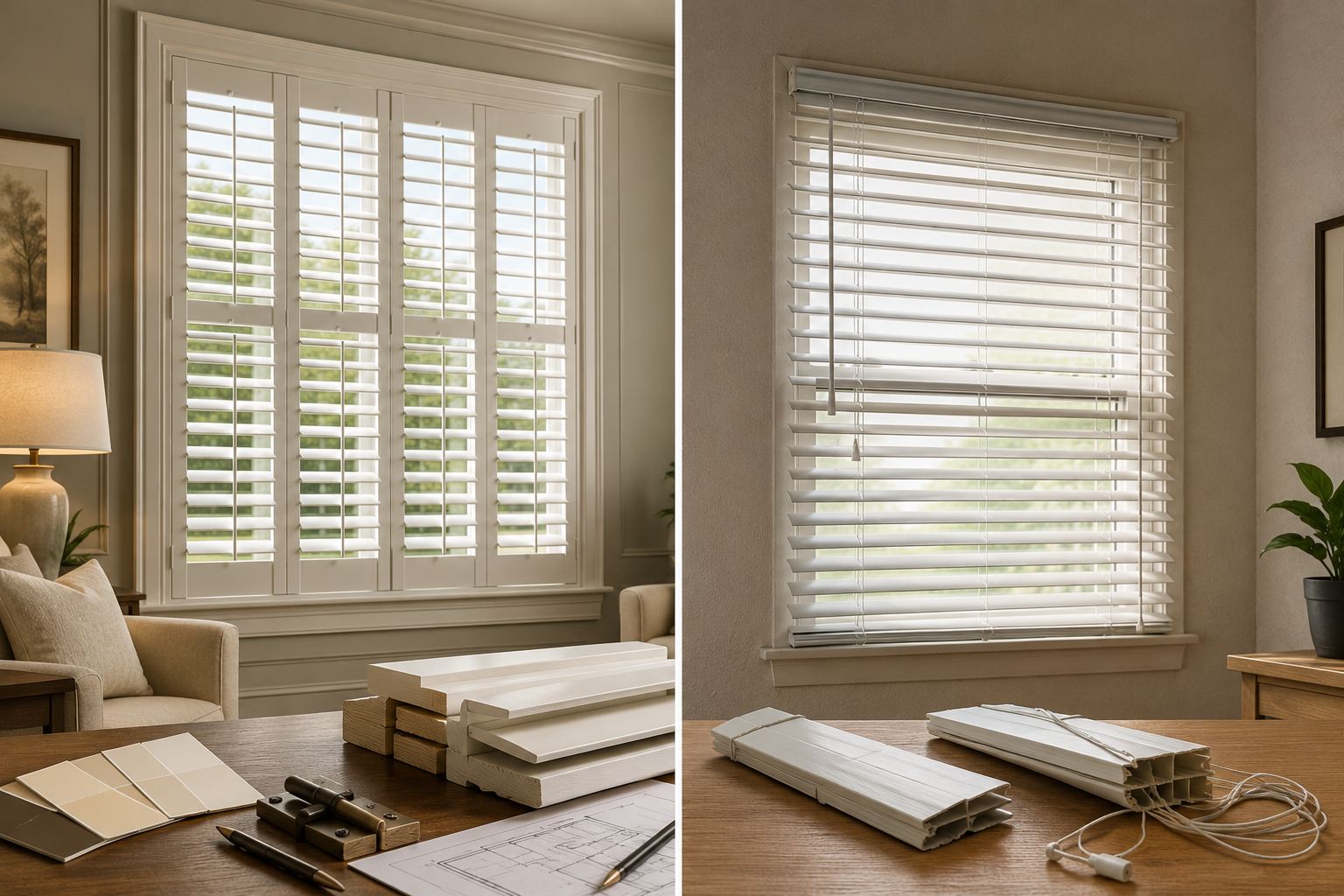
The financial case against cheap blinds becomes clear when you extend the comparison over a realistic homeownership horizon. The table below compares key cost and performance factors between budget blinds and quality plantation shutters over 20 years for a single standard window.
| Factor | Budget Blinds vs. Quality Shutters |
|---|---|
| Initial Purchase + Install | $50–$100 vs. $250–$350 |
| Expected Lifespan | 3–5 years vs. 20+ years |
| Replacements Over 20 Years | 4–6 replacements vs. 0 |
| Total 20-Year Product Cost | $200–$600 vs. $250–$350 |
| Energy Performance | Minimal insulation vs. Meaningful barrier |
| Home Resale Contribution | None vs. Positive fixture value |
| Maintenance Demand | Moderate and recurring vs. Very low |
What Degraded Blinds Do to a Room
There is a cost to worn window treatments that does not appear on any spreadsheet: what they do to how a room looks. Window treatments run the full vertical height of a wall, are visible from outside the home as well as inside, and frame every view out of every window. When they look worn, bent, or mismatched, that condition affects the perceived quality of the entire space — even if every other element in the room is well-maintained.
In Lexington, KY real estate, this matters more than many homeowners expect. Buyers walking through a home for the first time register the condition of window treatments — often without consciously noting it. Yellowed vinyl, bent slats, and uneven fading across multiple windows collectively signal deferred maintenance. That perception influences offers and negotiations, even when the rest of the home is in excellent condition.
When Budget Blinds Actually Make Sense
Budget window treatments are a genuinely reasonable choice in the right context. The following circumstances represent situations where the economics of budget treatments are actually sound.
- Rental properties where tenant turnover creates real replacement cycles anyway and per-unit cost control matters more than longevity
- Rooms scheduled for renovation within the next two to three years, where any window treatment is explicitly temporary by design
- Utility spaces — storage rooms, unfinished basements, attached garages — where function is the only requirement and appearance is not a factor
- Transitional housing situations where the homeowner plans to move within a few years and there is no long-term benefit to investing in permanent fixtures
Frequently Asked Questions
Are there mid-range options that split the difference?
A: Yes. Quality faux wood blinds, cellular shades, and roller shades from reputable manufacturers offer substantially better durability than budget products at a moderate price — often $150 to $250 per window installed. The quality jump from the cheapest tier to a solid mid-range product is the most significant improvement in the category. Moving from mid-range to premium buys refinement and warranty coverage more than meaningful additional durability.
How do I tell quality blinds from budget ones before I buy?
A: Slat thickness and rigidity are the clearest indicators. The tilt mechanism should feel smooth and consistent, not loose or grinding. Hardware weight is a reliable proxy for overall build quality. A meaningful manufacturer's warranty — not a 90-day limited warranty — signals that the company stands behind the product's durability.
Does brand name matter for blinds?
A: For mass-market products at big-box stores, brand recognition is less meaningful than specific product specs. For mid-range and premium products, established manufacturer brands with documented warranty support and available replacement parts represent genuinely lower risk than lesser-known alternatives.
Can individual broken slats be replaced?
A: Quality-brand manufacturers often sell replacement slats individually. Budget blind brands typically do not offer replacement parts, and the cost of sourcing a match — if possible at all — often approaches the cost of a new blind, making repair impractical.
Is there a point where spending more on blinds stops making sense?
A: Yes. The most significant quality improvement happens between the cheapest products and a solid mid-range alternative. Beyond the mid-range, incremental cost increases tend to buy finish options and branding rather than meaningfully better durability. For most rooms in most Lexington, KY homes, a well-chosen mid-range product represents the best value across the full cost spectrum.
Conclusion
Cheap blinds are not always the wrong answer. But they are rarely the money-saving answer homeowners assume them to be at the point of purchase. Replacement frequency, energy performance, and the effect on your home's presentation all factor into the true cost — and over a realistic time horizon, that cost often meets or exceeds what a quality product would have required from the start. Commonwealth Custom Shutters & Blinds works with homeowners throughout Lexington, KY to find the right solution at every price point. Schedule your free consultation to see what a quality upgrade actually costs for your home.