Shutters vs. Blinds: Which Is Right for Your Home?
June 1, 2026
The Answer Depends on the Right Questions
Walk into any showroom in Lexington, KY and both shutters and blinds will be presented with equal enthusiasm — because both are genuinely good products in the right context. The mistake most homeowners make is treating this as a taste question when it is really a practical one. Shutters and blinds solve different problems, suit different planning horizons, and carry different long-term implications for your home's value and daily routine.
This guide focuses on the factors that actually determine which product fits your situation: lifespan, cost structure, maintenance, and your home's specific conditions.
How Shutters and Blinds Actually Differ
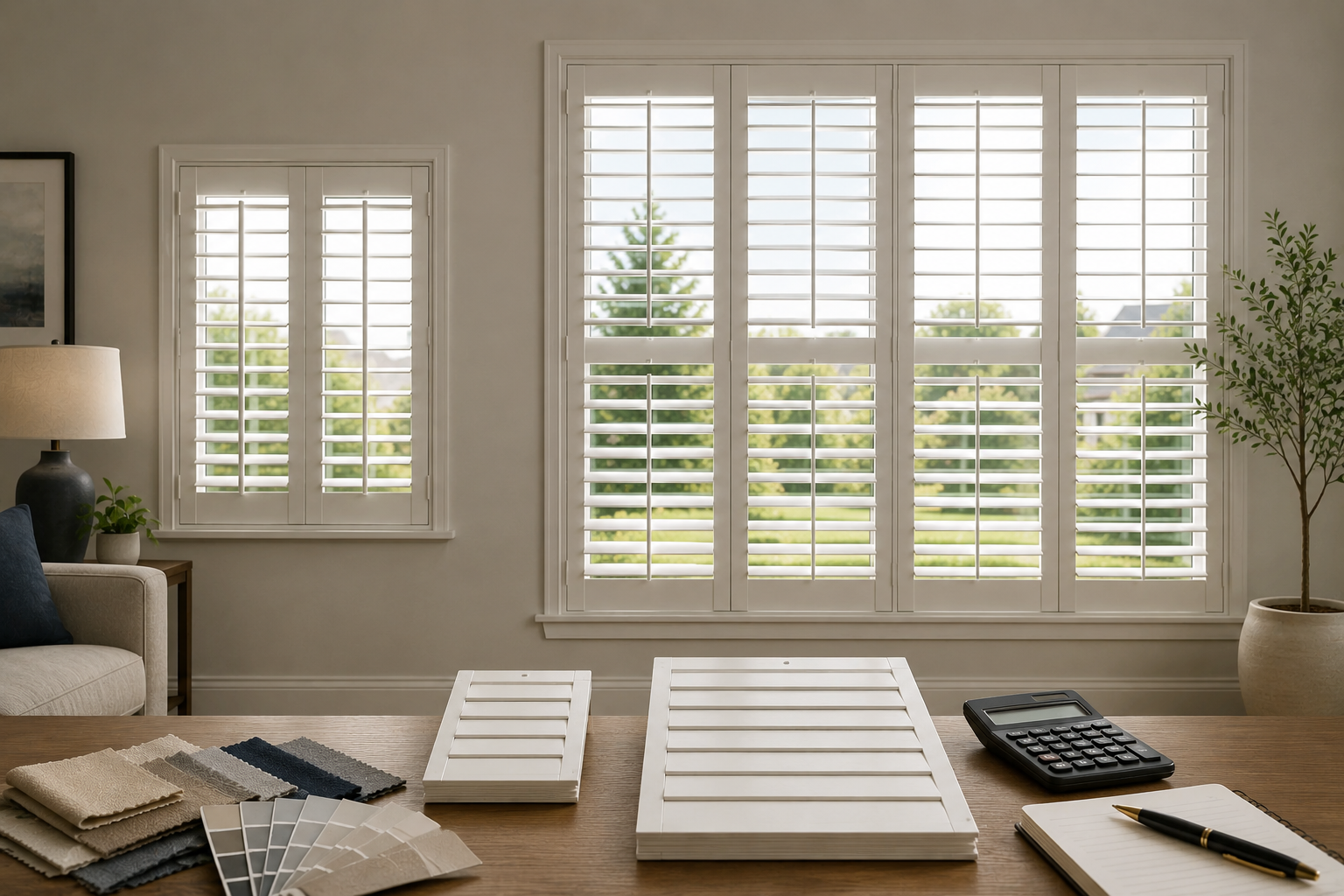
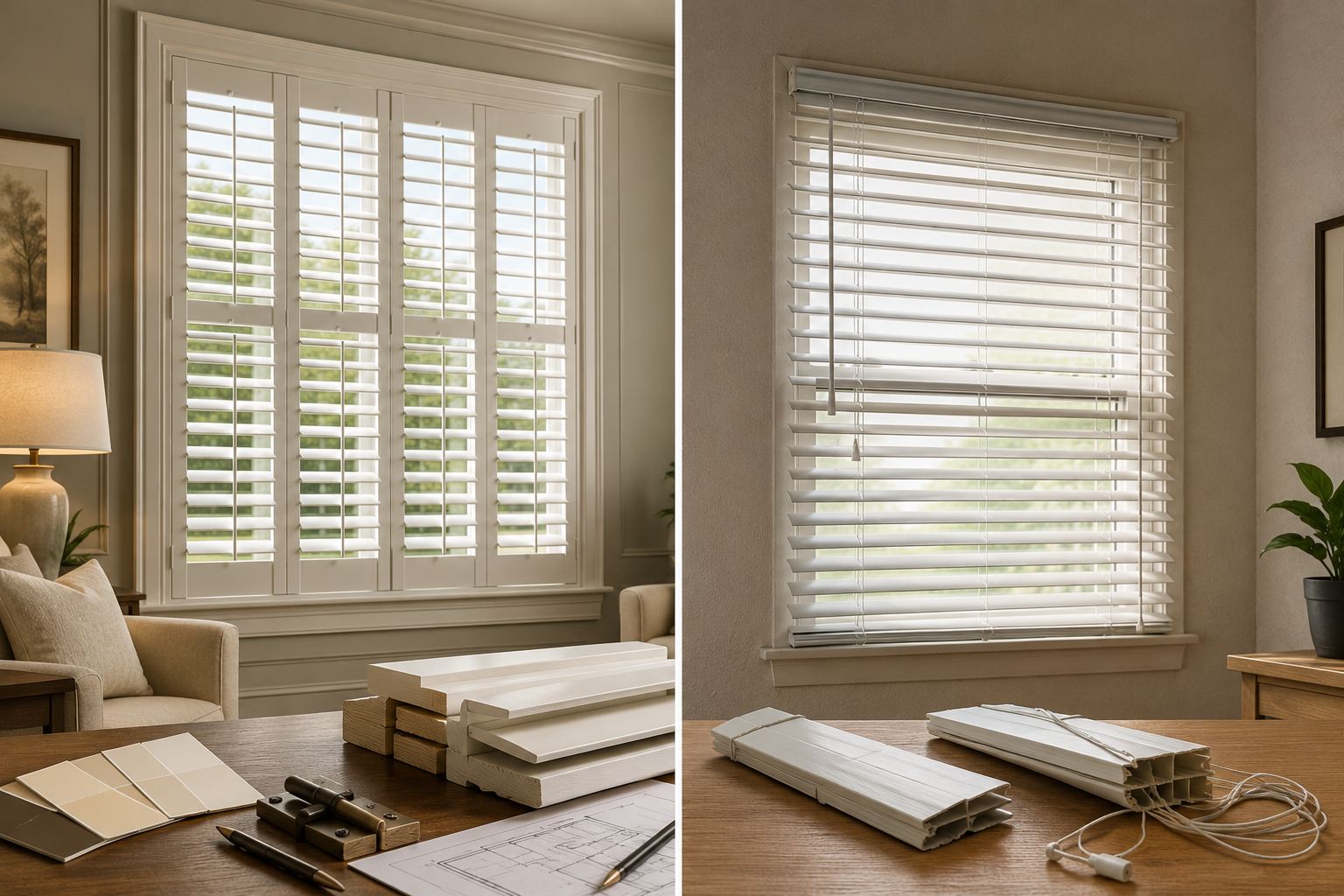
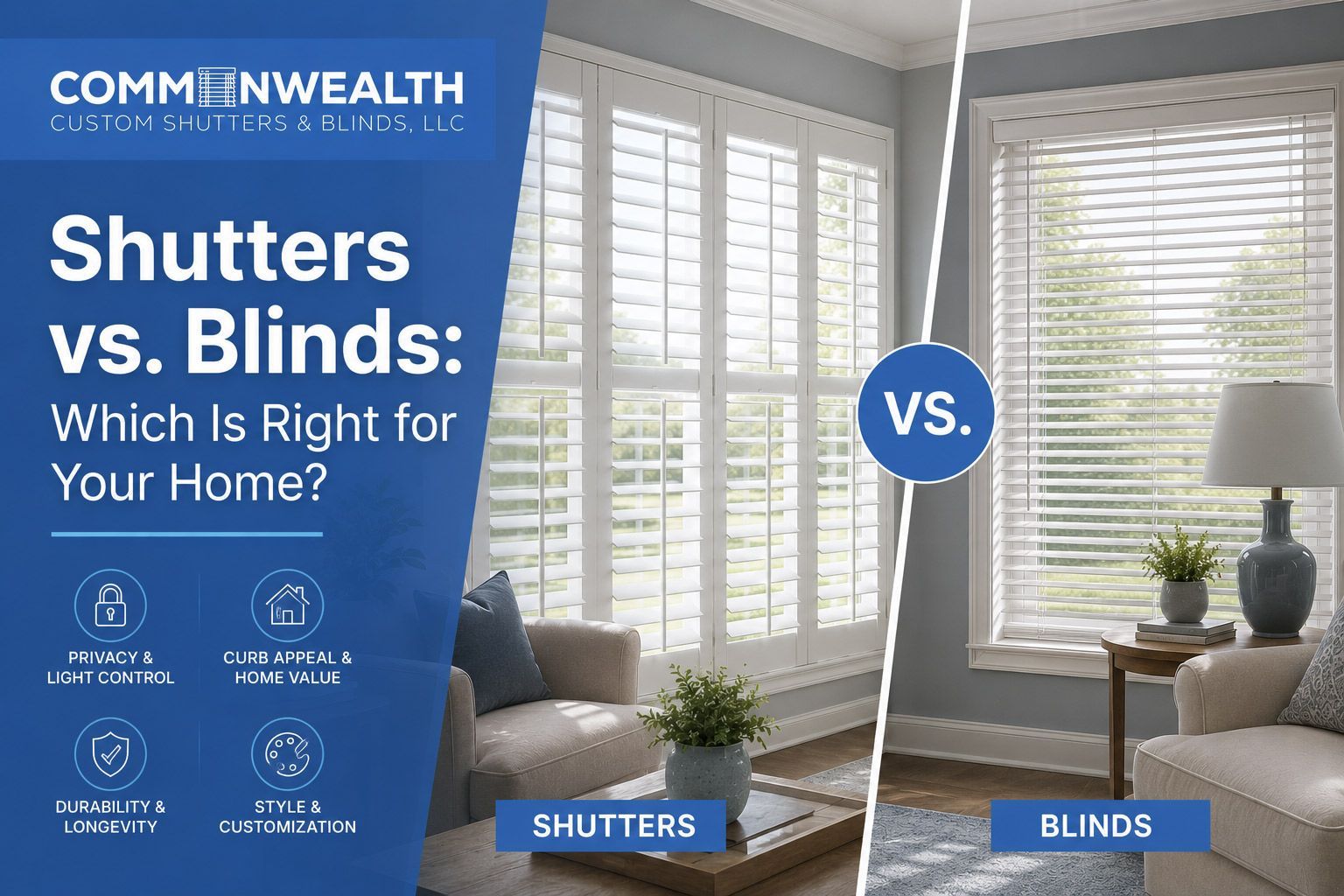
Plantation shutters are rigid, solid-panel coverings custom-built to fit directly into the window frame opening. Once installed, they become a fixture of the room — as permanent as the window trim. They are fabricated to the exact opening and mounted in a way that makes them part of the wall, not something hanging in front of it.
Blinds are suspended slat systems that hang inside or outside the frame but are not integrated into it. They can be installed and removed without affecting the frame, replaced without repainting, and switched out when tastes or circumstances change. That flexibility is both their strength and their limitation.
Side-by-Side Comparison
The table below compares shutters and blinds across the factors that matter most when making this decision for a home in Lexington, KY.
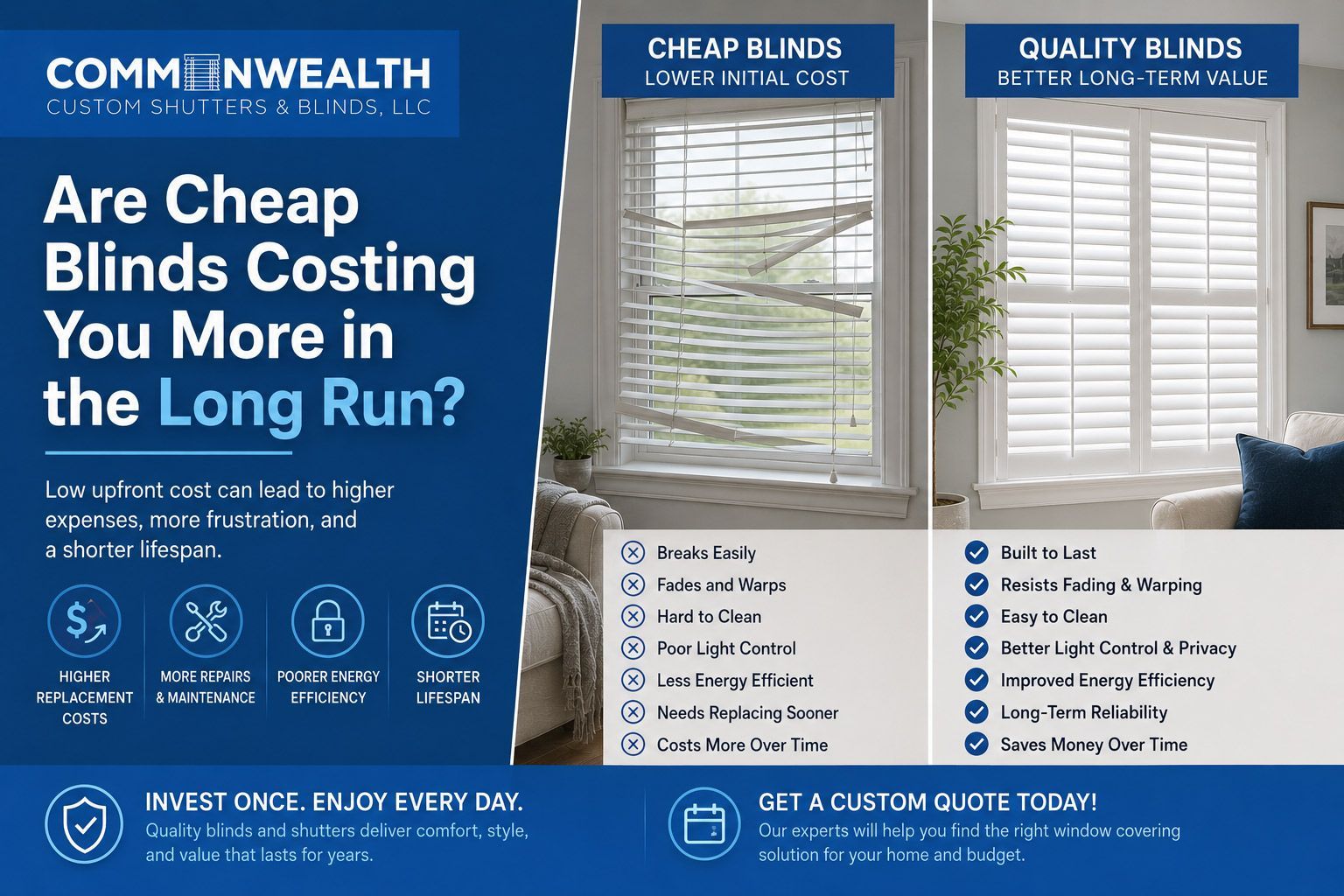
| Factor | Shutters | Blinds |
|---|---|---|
| Lifespan | 15–25+ years | 3–10 years |
| Light Control | Excellent — precise louver angle | Good — adjustable slats |
| Privacy | Excellent | Good to Excellent |
| Insulation Value | High — solid panel barrier | Low to Moderate |
| Cleaning | Very easy — wipe down | Moderate — slat by slat |
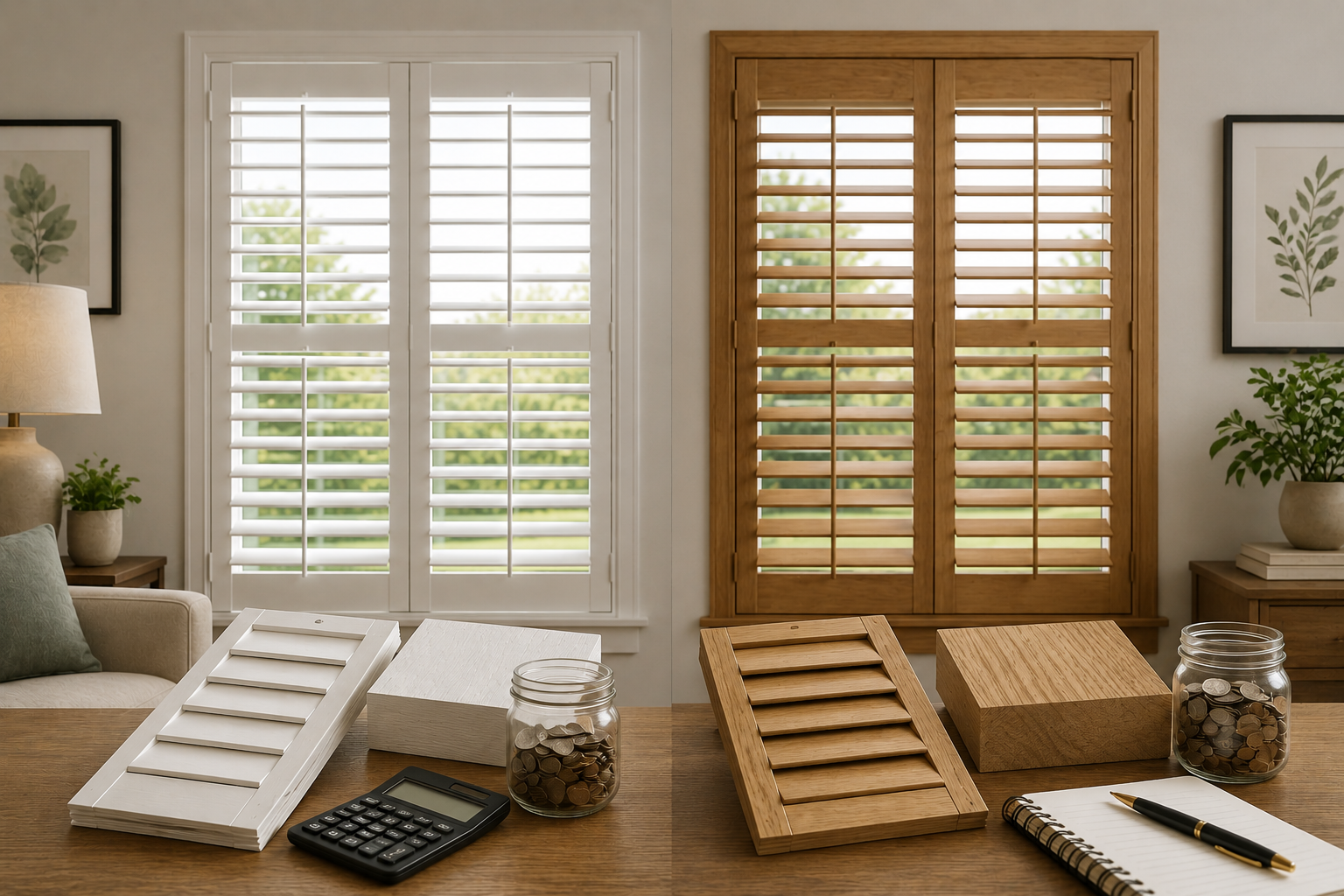
| Upfront Cost | Higher: $200–$450/window | Lower: $75–$300/window |
| Home Resale Value | Adds value as permanent fixture | Minimal impact |
| Custom Shapes | Yes — arched, angled, specialty | Limited |
| Child / Pet Safety | No cords, no fragile slats | Cord risk; slats can break |
| Maintenance | Very low | Low to moderate |
When Shutters Are the Better Choice
Shutters are the stronger choice in situations where durability, safety, or access are the primary concerns. Three scenarios consistently point toward shutters.
Long-Term Homeowners
If you plan to stay in your home for a decade or more, shutters make clear financial sense. A single investment lasts 20 or more years, adds to appraised value, and requires almost no upkeep. For homeowners in Lexington, KY treating their property as a long-term asset, shutters belong in the same investment category as hardwood floors and kitchen updates.
High or Hard-to-Reach Windows
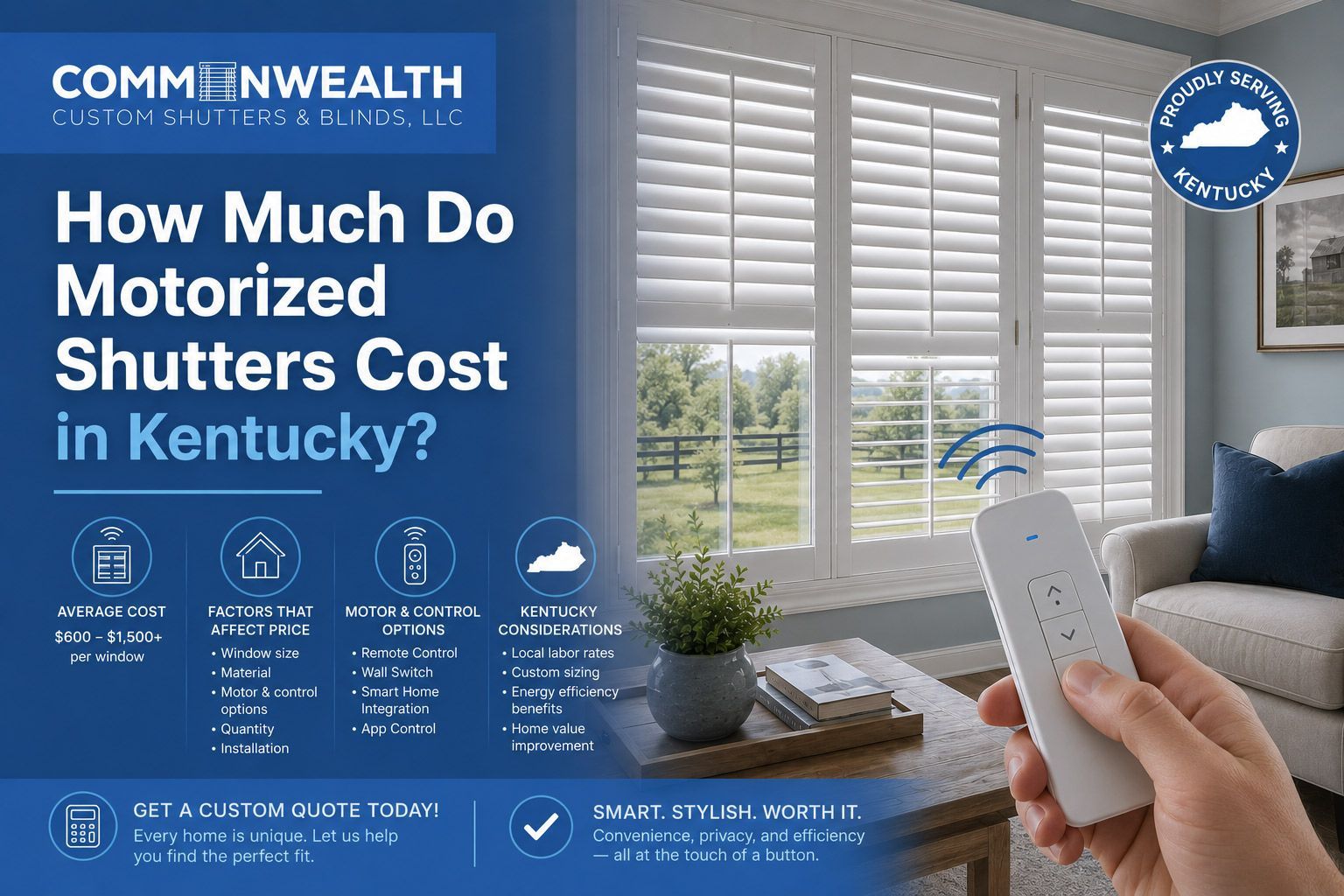
Motorized plantation shutters are the most practical solution for windows that cannot be reached by hand — great rooms with soaring ceilings, second-floor windows, and skylights. Manual blinds in these locations often go weeks without being adjusted simply because of the inconvenience. A motorized shutter solves this with one button press.
Homes with Children or Pets
Shutters eliminate two of the most common hazards of traditional blinds: dangling cords and breakable slats. No cords create strangulation risk for young children, and no fragile slats snap when a dog or cat pushes against the window. For families in Lexington, KY with active children or large pets, this safety advantage alone often makes shutters the clear call.
When Blinds Are the Better Choice
Blinds are the smarter choice when flexibility, variety, or a shorter commitment are the priority. Three scenarios consistently point toward blinds.
Shorter Planning Horizons
If you're furnishing a rental property, covering windows in a room you plan to renovate, or in a home you'll sell within a few years, quality blinds deliver functional light control and privacy at a fraction of the shutter cost. The lower commitment is a feature in these situations, not a compromise.
Flexible Style and Color Needs
Shutters come in a defined range of finishes — typically white, off-white, or stained wood. Blinds and shades are available in hundreds of fabrics, colors, and textures. If you want the window treatment itself to be a deliberate design statement in a specific color or pattern, blinds and shades give you options that shutters simply cannot match.
Secondary and Functional Spaces
Utility rooms, home offices, garages, and storage spaces don't benefit from the architectural permanence of plantation shutters. In rooms where the goal is purely functional — block light, maintain privacy — a quality faux wood blind or roller shade handles the job cleanly and economically.
Frequently Asked Questions
Can I mix shutters and blinds in the same home?
A: Yes, and it's a common approach. Shutters in high-visibility or high-use rooms, blinds or shades in secondary spaces — this combination gets the most value from each product without applying a one-size-fits-all solution to every window.
Do shutters provide any sound reduction?
A: Solid-panel shutters provide a modest degree of sound dampening compared to an uncovered window. Blinds offer very little acoustic benefit. If noise reduction is a priority, shutters are the better window treatment option, though they are not a substitute for acoustic glazing in high-noise environments.
How do shutters and blinds compare in bathrooms?
A: Faux wood shutters and faux wood blinds both perform well in humid environments. Real wood of either type should be avoided in bathrooms. Moisture-resistant roller shades are another strong option for bathroom windows where condensation is a regular concern.
Which blocks more light when fully closed?
A: Properly fitted plantation shutters block light more completely than most blinds because solid panels minimize edge gaps. For true blackout performance — nurseries, media rooms — a blackout roller shade remains the most effective single product.
Which is easier to operate for someone with limited mobility?
A: Motorized versions of either product eliminate manual effort entirely. For non-motorized operation, shutters with a single tilt rod are generally easier than adjusting multiple slats on a wide blind, especially for large windows.
Conclusion
Shutters and blinds are both good products. The question is which one is right for your situation — and the answer depends on how long you're staying, what the room needs, and what you're optimizing for. Commonwealth Custom Shutters & Blinds helps homeowners throughout Lexington, KY work through this decision window by window, without pressure in either direction. A free in-home consultation is the best way to get a recommendation grounded in your actual home and goals.