How Much Do Motorized Shutters Cost in Kentucky?
July 26, 2026
Why Motorized Shutter Pricing Is Hard to Pin Down
Motorized plantation shutters have moved from high-end specialty item to a practical solution for homeowners dealing with tall windows, vaulted ceilings, and hard-to-reach openings. But if you've started researching pricing, quotes vary widely and the reasons aren't always explained.
The variability is real, not arbitrary. Motorized shutter cost is a function of the window, the motor type, and the control system — three variables that combine differently in every project. This guide breaks down exactly what drives the cost in Kentucky, gives you realistic price ranges to benchmark against, and helps you evaluate whether motorization makes sense for your situation.
Motorized vs. Manual Shutters: What You're Actually Paying For
The premium for motorization over a comparable manual shutter comes from three distinct cost components. Understanding each one explains why quotes for motorized systems vary more than quotes for manual products.
- The motorized unit itself — the product is priced higher at the manufacturer level than its manual equivalent, before any installation work begins
- Installation labor — motorized systems require calibration: setting motor open and closed limit positions, wiring or configuring battery systems, and pairing the control device. Manual shutters require none of this
- The control system — a basic RF remote costs less than a multi-channel remote that controls all shutters simultaneously, which costs less than full smart home integration with voice control and scheduling
Typical Motorized Shutter Pricing in Kentucky
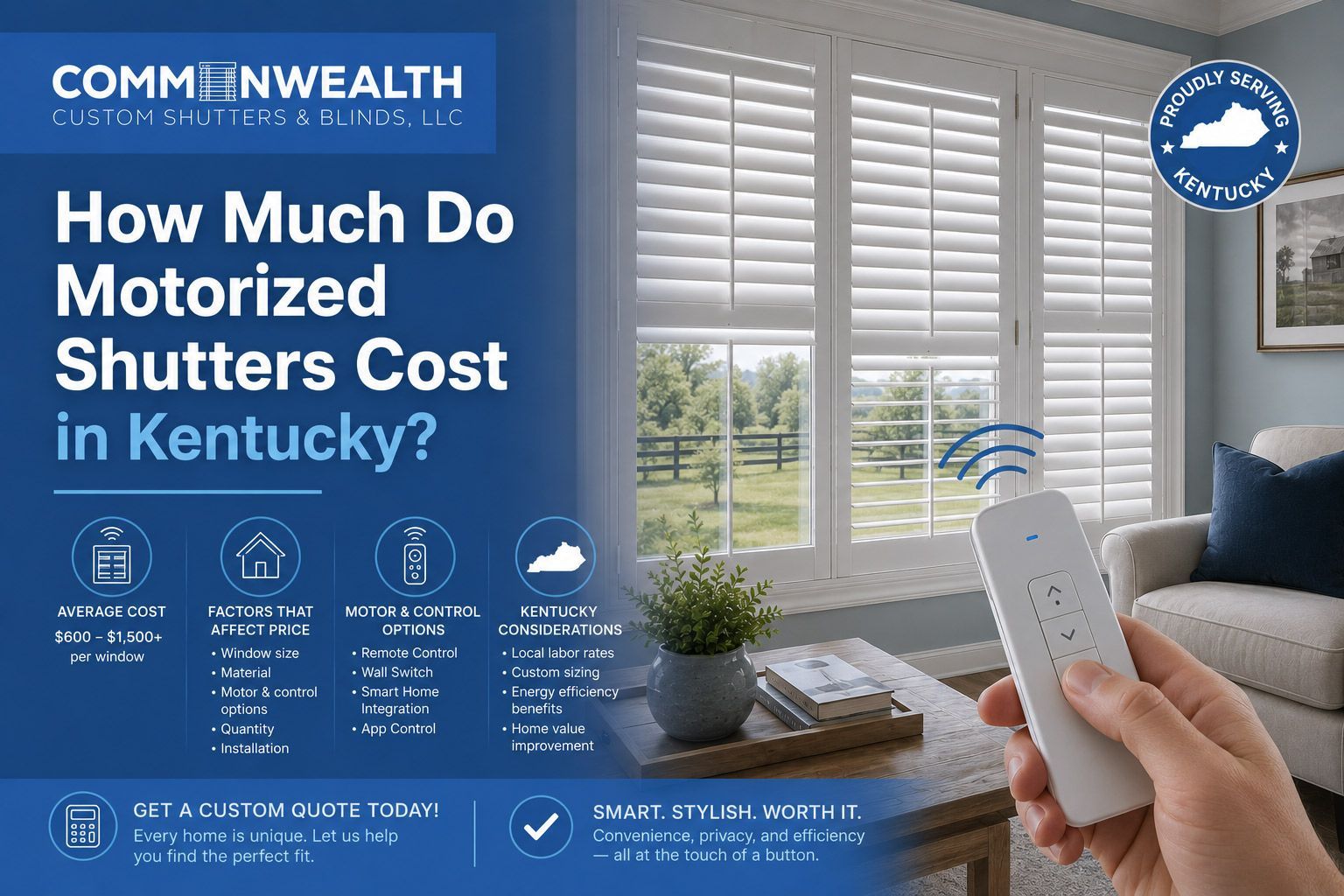
The table below reflects installed price ranges Kentucky homeowners generally encounter when sourcing motorized plantation shutters through a professional installation company. All figures include the shutter product, motorization hardware, and installation labor.
| Window Type / Size | Estimated Installed Cost |
|---|---|
| Standard single window (24"–36" wide) | $450 – $700 |
| Large single window (36"–60" wide) | $600 – $900 |
| Great room or picture window (60"+ wide) | $800 – $1,400+ |
| High or second-floor window | $650 – $1,000 |
| Custom-shaped window (arched, angled) | $700 – $1,200+ |
| Smart home integration (per system) | $150 – $400 |
What Drives the Cost Higher or Lower
Two variables have the largest impact on where a motorized shutter project lands within the pricing ranges above.
Motor Type
Hardwired motors require an electrician to run wiring to each window. That adds upfront labor cost, but hardwired motors are the most reliable long-term option and eliminate battery replacement entirely.
Battery-powered motors cost less to install — no wiring required — but involve periodic battery changes that become inconvenient on high or hard-to-reach windows, which are exactly the windows where motorization is most often used.
Solar-powered motors with rechargeable cells sit between the two in cost and convenience, performing well in rooms with consistent natural light.
Control System Complexity
A basic RF remote that operates a single shutter is the least expensive control option. A multi-channel remote capable of controlling every motorized shutter in the home simultaneously adds cost but delivers dramatically better convenience in practice.
Full smart home integration — voice control through Google Home or Amazon Alexa, scheduling through a smartphone app, or connection to an existing home automation system — is the highest-cost configuration. For homeowners in Lexington, KY who already have a smart home ecosystem, this is often considered a natural extension of an investment already made.
The Practical Case for Motorized Shutters in Kentucky Homes
Motorized shutters solve specific, practical problems. The following are the situations where motorization consistently delivers value proportionate to its cost.
- High windows in great rooms, two-story foyers, and vaulted ceiling spaces where manual adjustment requires a ladder and is impractical for daily use
- Second-floor windows where operating manual shutters requires leaning past furniture or reaching at awkward angles
- Homes with older adults or residents with limited mobility for whom repeated manual operation across multiple windows is physically taxing
- Smart homes where automated opening and closing based on time of day reduces solar heat gain and air conditioning load without requiring manual intervention
- Custom or specialty-shaped windows where manual tilt rods are difficult to design elegantly and a motor provides cleaner, simpler operation
Frequently Asked Questions
Can existing manual shutters be converted to motorized?
A: In some cases, yes. Retrofitting depends on the shutter brand, panel design, and whether the frame has adequate space to accommodate a motor housing. It is worth having an installer assess existing shutters before assuming retrofit is not possible, but purpose-built motorized units are generally more reliable.
How long do the motors typically last?
A: Quality motors from established manufacturers are rated for tens of thousands of operating cycles — many years of regular daily use. Most reputable brands offer warranties of five years or more on the motor component separately from the shutter warranty.
What happens to motorized shutters during a power outage?
A: Battery-powered and solar motors continue functioning normally during power outages. Hardwired motors do not operate without power unless the system includes a battery backup unit — an addition worth considering in Kentucky's storm-prone climate.
Are motorized shutters noticeably noisy?
A: Modern motors are very quiet — comparable to a ceiling fan at low speed. If noise sensitivity is a concern, ask your installer to demonstrate the specific motor model before committing. Quality matters: budget motors can be noticeably louder than premium ones.
Can I control motorized shutters remotely when away from home?
A: With smart home integration, yes. Systems connected to Google Home, Apple HomeKit, or SmartThings allow full remote control from a smartphone anywhere with internet access. This is particularly useful for managing light and privacy while traveling.
Conclusion
Motorized shutters solve real problems — not just luxury preferences. For high windows, accessibility needs, smart home integration, and large homes where manual operation across many windows is genuinely burdensome, the value they deliver is proportionate to their cost. Installed pricing in Kentucky typically ranges from $450 to over $1,000 per window depending on configuration. Commonwealth Custom Shutters & Blinds serves homeowners throughout Lexington, KY and across Kentucky, offering free in-home estimates with a full breakdown of motorized options for your specific windows. If you're weighing whether motorization is right for your home, that conversation is the best place to start.