Faux-Wood vs Vinyl Blinds: Best Choice for Kentucky Humidity
November 10, 2025
What Makes Kentucky Humidity a Blind Problem?
Moisture doesn’t just sit on the surface of blinds — it permeates the material over time.
- Real wood swells, the slats begin to curve, and finish can peel
- Metal blinds collect condensation, leading to rust near the cords and hardware
- Fabric shades absorb moisture, developing mildew in bathrooms and kitchens
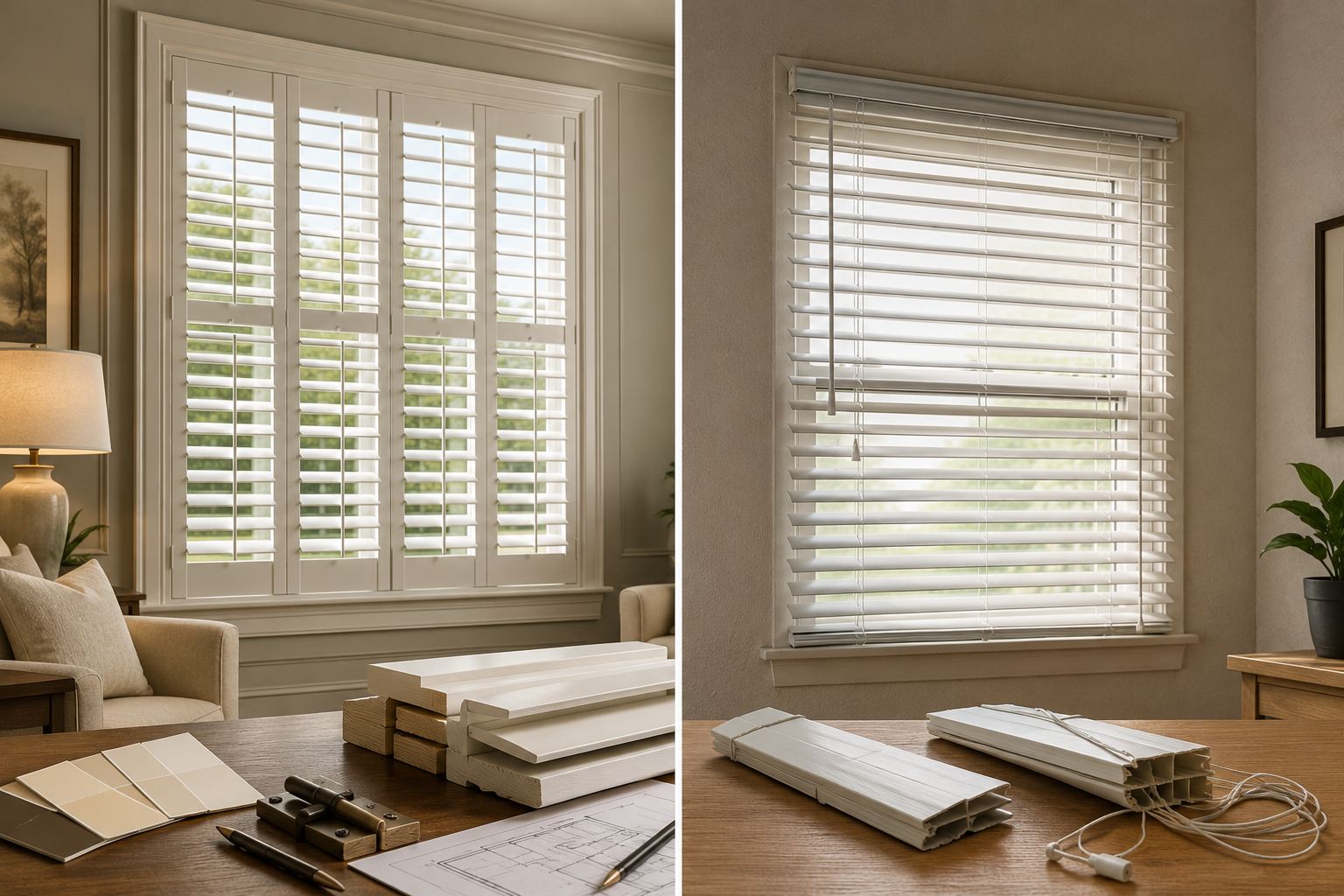
Faux-wood and vinyl blinds exist for this reason: they introduce the look of structured slats without the vulnerability of real wood.
However, the similarities end there — they behave differently in daily use.
Faux-Wood Blinds: Durable Style That Fits Most Living Spaces
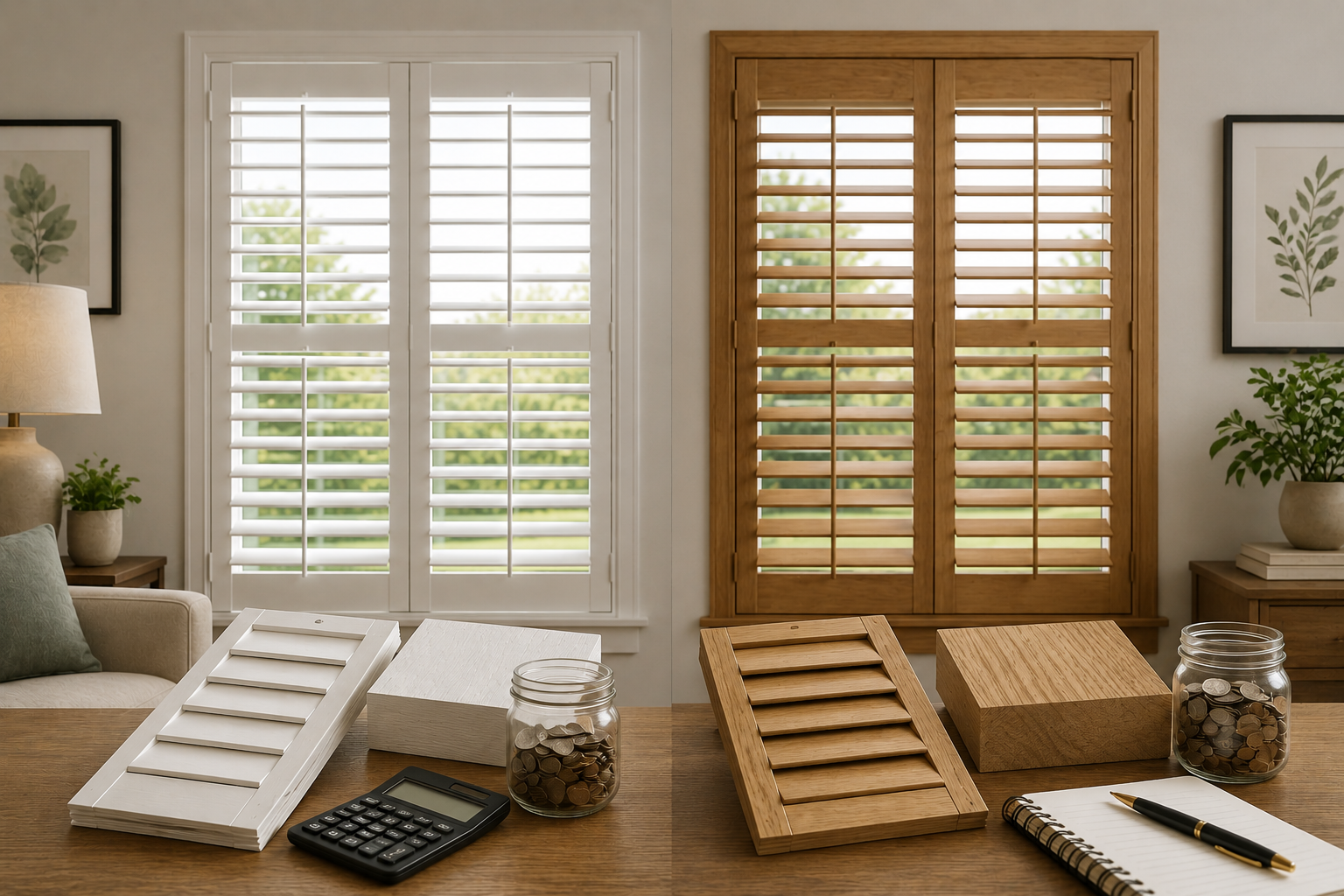
If you’ve ever seen faux-wood blinds in person, the first thing you notice is the visual warmth. The slats mimic natural grain, matte wood-tone finishes, and even crafted textures. The goal is to give you the same visual presence as real wood — without the maintenance.
How Faux-Wood Performs in Humid Conditions
Faux-wood slats are made from PVC, composite wood blend, or polymer materials. These materials do not absorb moisture, which means:
- Slats do not warp
- The finish stays stable
- The blinds hold their weight and form over the years
This is especially useful in:
- Bathrooms where steam collects after showers
- Kitchens where boiling water creates concentrated humidity
- Sunrooms where direct light amplifies heat
Aesthetic Fit
Faux-wood compliments:
- Painted wood trim
- Hardwood flooring
- Stone and granite countertops
- Traditional or transitional interior styles
It works best in main living spaces where visual warmth matters.
Vinyl Blinds: Simple, Practical, and Moisture-Proof
Vinyl blinds are a highly functional choice — they’re light, easy to install, easy to clean, and affordable. They are truly moisture-proof, so they're often chosen for areas where durability is more important than design.
How Vinyl Performs Over Time
Vinyl doesn’t warp from moisture, but it can respond to sunlight:
- Strong UV exposure may cause yellowing
- Heat exposure may make slats more flexible
- Over time, they may sag or bend if kids or pets handle them roughly
This doesn’t mean vinyl is low quality. It simply means it performs best in rooms that aren’t front-and-center in your everyday living.
Where Vinyl Makes Sense
Think:
- Laundry room over the utility sink
- Basement guest room
- Garage windows
- Secondary bathrooms
- Rental properties or temporary home layouts
Vinyl is the choice for practicality.
Which One Is Better For Your Home? A Room-by-Room Breakdown
Below is a decision guide based on function, daily activity level, and how visible the room is in your home.
Kitchen
Steam, heat from the oven, and everyday splashes happen here.
If you want the room to look polished and cohesive: Faux-wood
If you prioritize easy cleaning and budget: Vinyl
Bathrooms
High humidity every single day.
For larger bathrooms attached to primary bedrooms: Faux-wood
For hall baths or guest baths: Vinyl is fine
Living Room & Bedrooms
These are visual spaces where design matters and blinds contribute to the look of the room.
Choose faux-wood — it feels intentional, not temporary.
Basement or Laundry Room
These rooms simply don’t need the aesthetic emphasis.
Choose vinyl — reliable, simple, cost-effective.
Cleaning & Maintenance: A Quick Real-Life Example
Let’s say you’re cleaning weekly.
You spray the blinds lightly, wipe once, done.
- Faux-wood blinds have a matte, slightly textured finish, which tends to hide dust. The slats feel sturdy while you wipe them.
- Vinyl blinds have a smooth and glossy finish, where dust is more visible. They wipe clean fast, but the slats are thinner and move more.
Neither requires special cleaners.
No polishing.
No oiling.
No re-sealing.
Just a simple wipe-and-go routine.
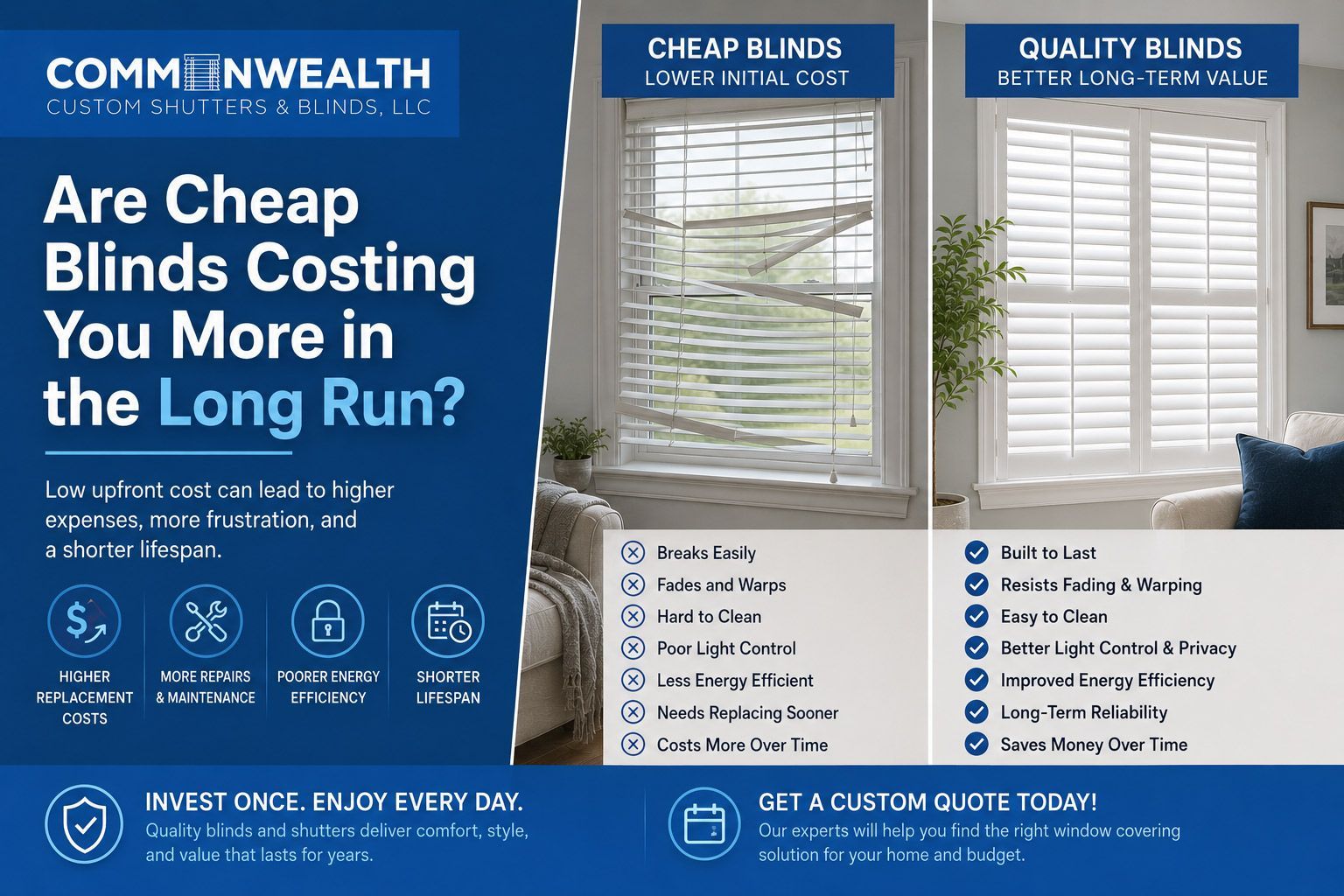
Budget and Long-Term Value
Sometimes the right decision comes down to time.
If you want blinds that
won’t need replacing soon → Faux-wood pays off long-term.
If you need to outfit multiple rooms at once and cost matters → Vinyl reduces total spend immediately.
A good rule of thumb:
- Put faux-wood where people gather.
- Put vinyl where people pass through.
FAQs
- Do faux-wood blinds actually look like real wood?
Yes. Modern faux-wood finishes are intentionally designed to replicate wood grain. In many rooms, it’s difficult to tell the difference unless you touch the slats.
- Will either option warp in Kentucky humidity?
No. Both materials are humidity-resistant. Faux-wood tends to maintain color and shape longer in sunlit rooms.
- Which blinds are better if I have pets or kids?
Faux-wood is sturdier and holds up better to accidental bending or pressure.
- Can I use vinyl blinds in a main living room?
You can, but the room may not feel as finished or warm as it would with faux-wood blinds.
- Do these come in custom sizes?
Yes. Both materials can be custom-measured, fitted, and installed for perfect alignment with your windows.
Conclusion
Kentucky’s humidity calls for moisture-resistant blinds — and both faux-wood and vinyl meet that requirement. The difference is in how they look, how they feel, and how they support the character of each room.
- Use faux-wood in living areas, kitchens, and primary rooms for warmth, style, and long-term durability.
- Use vinyl in basements, utility spaces, and secondary rooms where practicality matters more than aesthetics.
Choosing the right material ensures your
blinds stay straight, clean, and beautiful — without warping or discoloring, no matter the season.