High-Ceiling Window Coverings: Handling Tall Installations with Ease
December 14, 2025
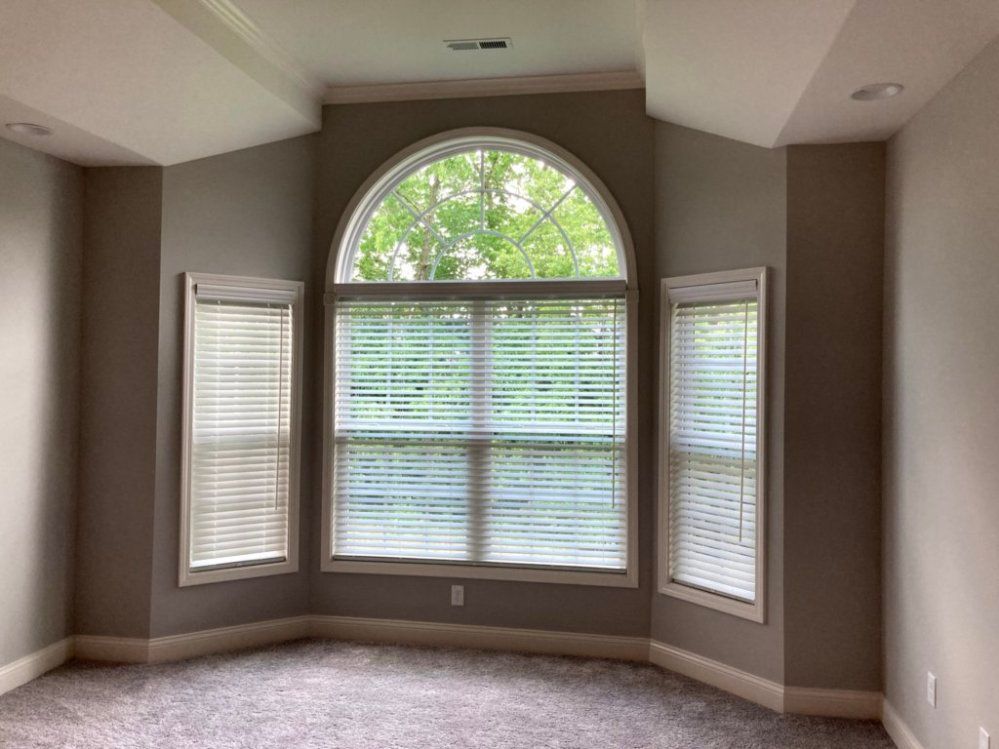
Tall windows are one of the most eye-catching architectural elements in a home. They pull in natural light, highlight ceiling height, and make rooms feel open and inviting. But when it comes to managing brightness and privacy, these same windows can become difficult to control. Everyday adjustments should be easy, not inconvenient.
The key to treating tall windows successfully is to select coverings that respect the scale of the height, operate effortlessly from ground level, and maintain the elegance of the room rather than interrupt it.
Why Tall Windows Require a Different Approach
Before choosing window coverings, it helps to understand what makes tall installations unique. Light enters the room from higher angles, which means glare can show up where you don’t expect it — on floors, screens, or furniture. Heat builds more quickly near the upper glass and moves downward. And unlike standard windows, you can't simply reach up to adjust blinds or cords.
Because of this, tall windows need window coverings that:
- Complement the
vertical scale
- Offer
controlled light filtration instead of full blocking
- Are
easy to operate without reaching or climbing
- Maintain a
balanced, intentional appearance
The right treatment should protect comfort while preserving the room’s openness.
Window Covering Solutions That Work Well
Different window types serve different functions in the room. Below are coverings that work particularly well for tall installations, with context before each option so the purpose is always clear.
Motorized Shades
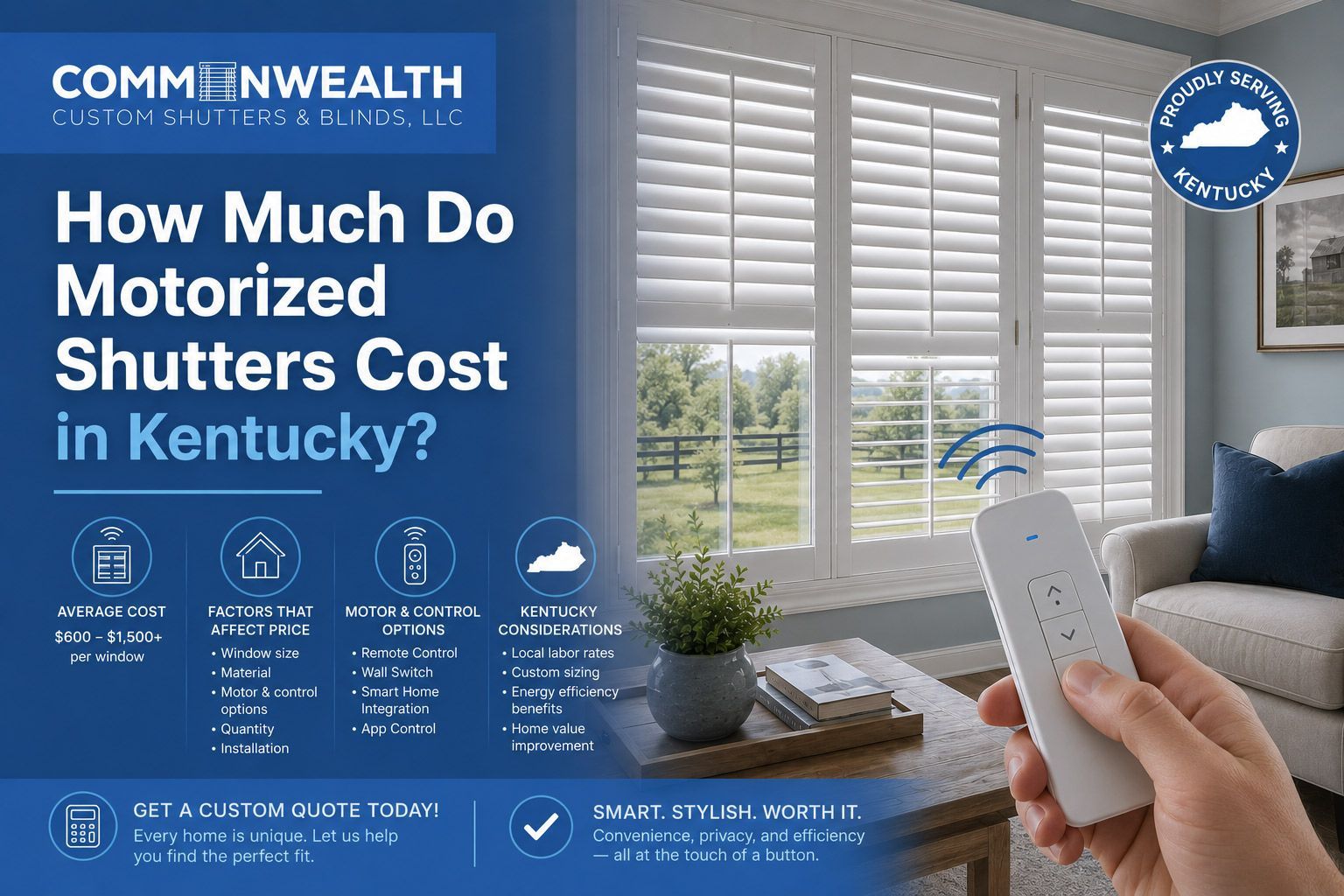
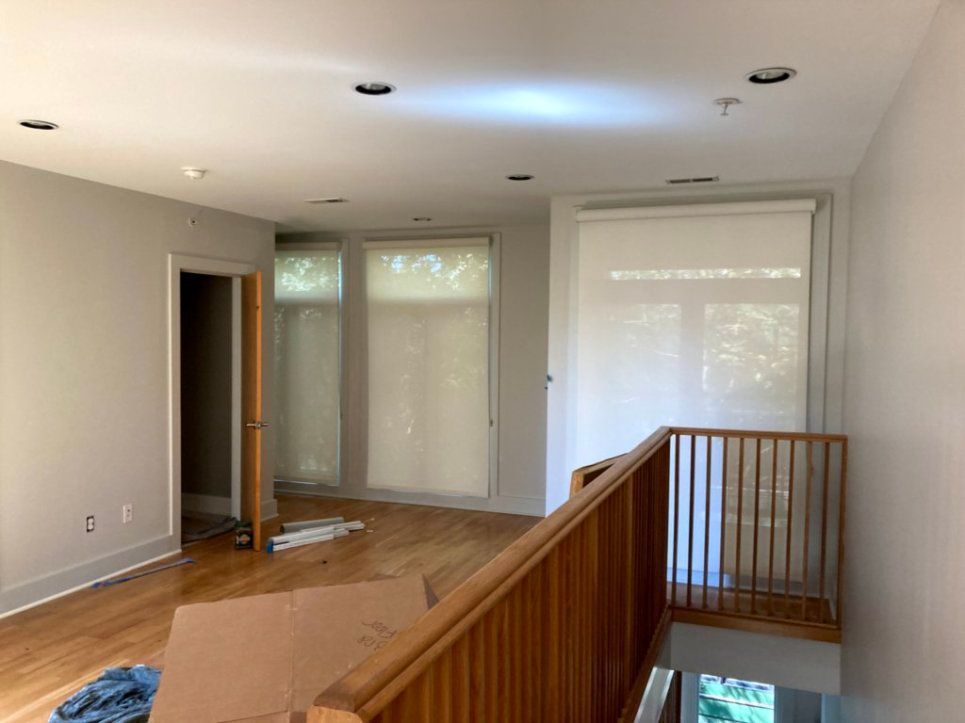
When ease of use is the priority, motorized shades provide the simplest solution. They open and close smoothly at the press of a button, with no cords or manual adjustments. This keeps the window unobstructed and the room visually calm. Motorization works especially well in tall living rooms, vaulted ceiling spaces, and two-story foyers.
Plantation Shutters
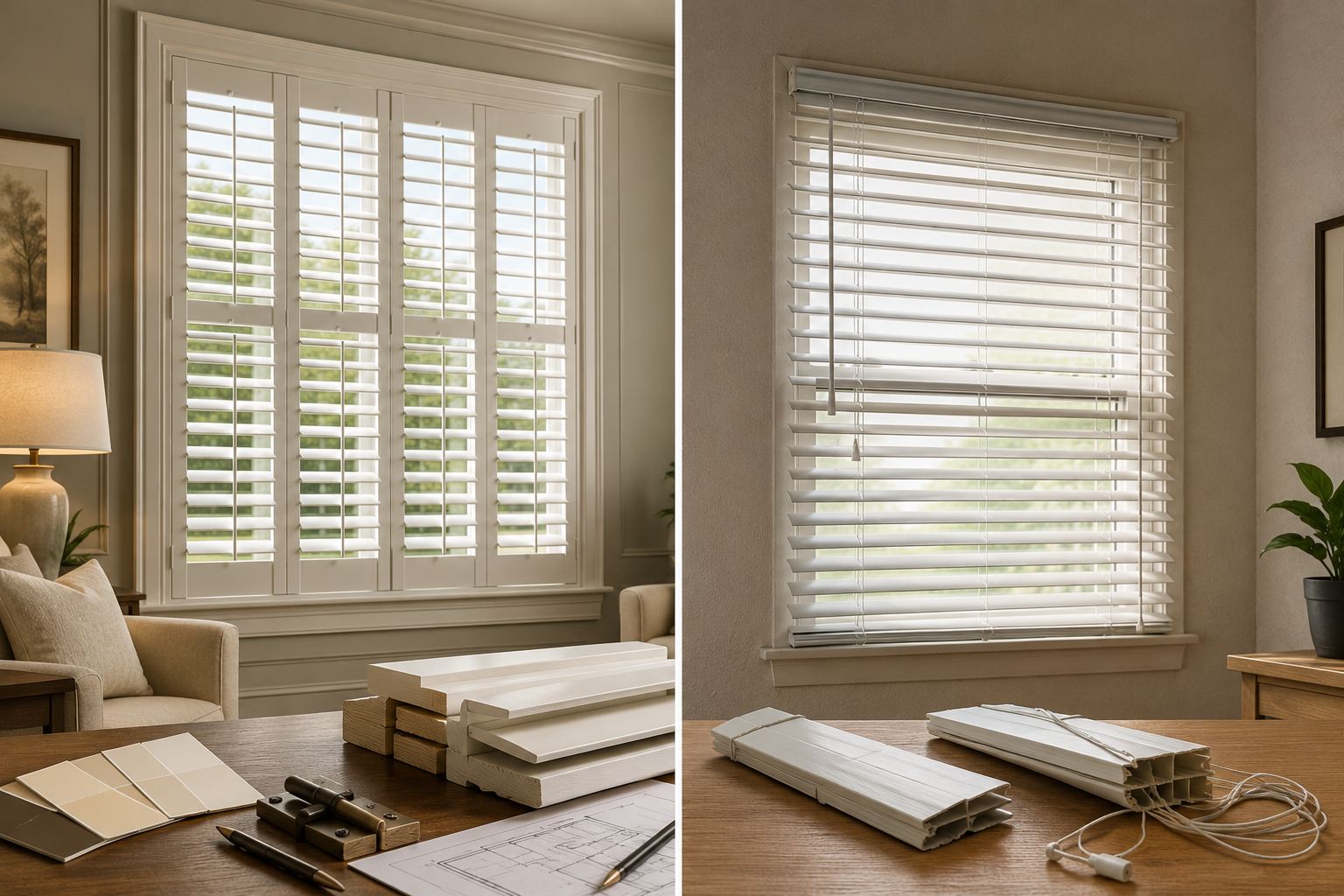
For homes that lean more traditional, plantation shutters add structure and presence. Their framing helps anchor the height of the wall so the window doesn’t appear too tall or “floating.” Because the louvers tilt independently, you can control sunlight without needing to lift anything overhead. The result feels architectural, not just functional.
Full-Length Drapery
If the goal is to soften the room and make it feel more tailored, drapery is ideal. When drapery panels extend from high above the window down to the floor, they emphasize the height of the room instead of dividing it visually. Drapery adds warmth and can easily be paired with a shade behind it to combine style and practicality.
Cellular Shades
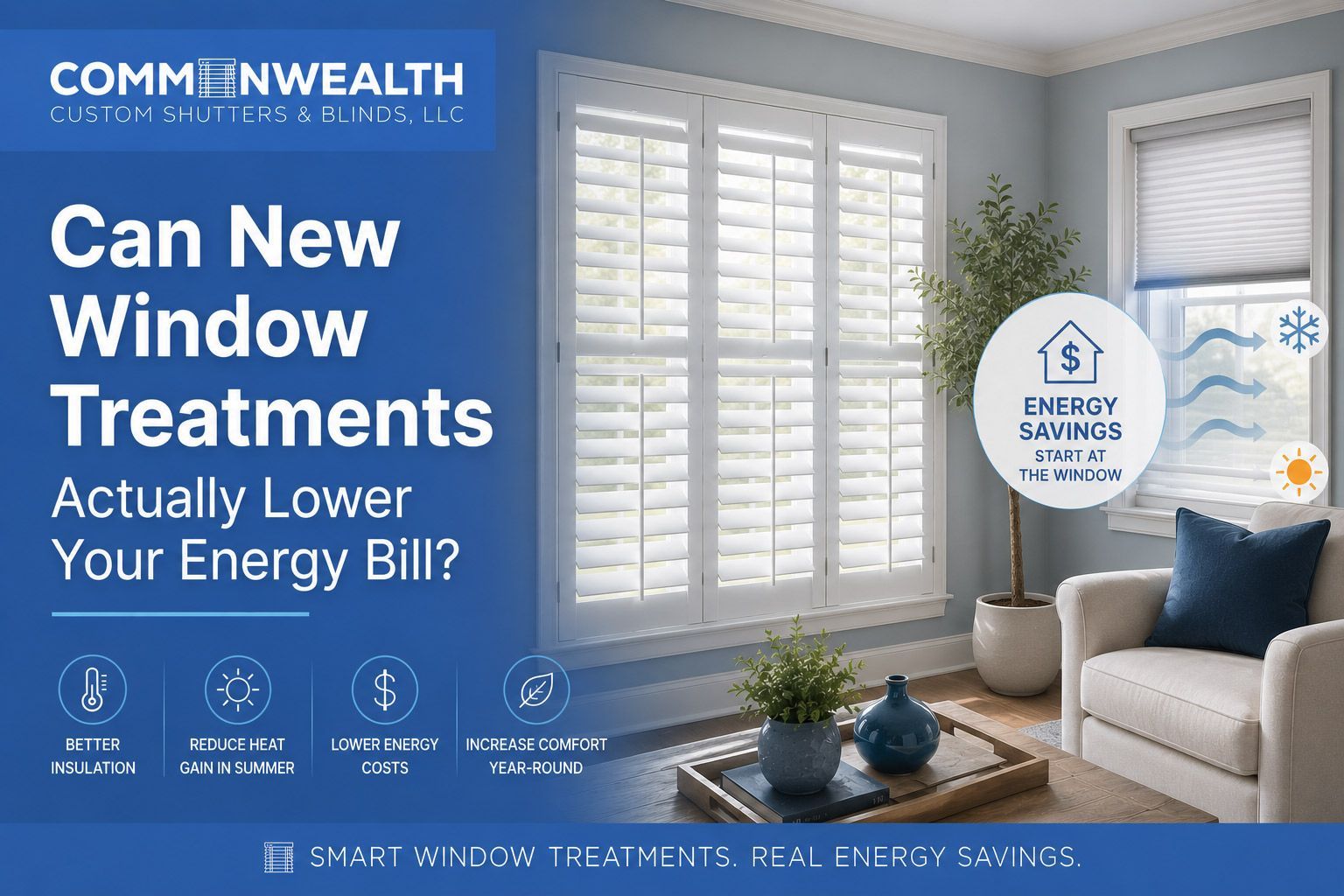
Some tall windows let in heat more quickly than others. In these cases, cellular (honeycomb) shades help regulate temperature while allowing natural light to remain. Their internal structure buffers heat and glare, making the room more comfortable throughout the day. When motorized, they offer efficiency and convenience in one solution.
How to Decide What’s Right for Your Space
Choosing the right covering becomes easier when you think about how the room functions. Below is a step-by-step guide, introduced with context, for choosing confidently.
To narrow your options, consider the following factors:
- How often you adjust light
If the room changes in brightness throughout the day, something easy to operate (like motorized shades) will matter long-term. - The style and mood you want
Shades feel minimal and clean. Drapery feels warm and layered. Shutters feel structured and architectural. - How much light you want to keep
Some spaces look best bright and filtered; others need soft dimming or directional control. - The visual weight of the covering
The window should look balanced, never overwhelmed or undersized. The covering should appear like it belongs.
Real-Home Example
A Lexington homeowner with a two-story living room loved the natural light but struggled with afternoon glare and a lack of privacy after sunset. Rather than covering the entire height with heavy material, we installed motorized light-filtering shades for daytime use, then layered full-length drapery over the lower portion of the window to create warmth and visual balance.
The room stayed bright during the day, glare became manageable, and evening privacy felt effortless — all without losing the dramatic height of the windows.
This is how the right solution supports both comfort and design.
FAQs
- Do I have to motorize tall window coverings?
Not always, but motorization eliminates the reach issue and keeps the window visually clean. It’s the most convenient long-term choice. - Will shutters be too heavy for tall windows?
Custom shutters are engineered for height. With proper measurements and installation, they open and close smoothly. - Can I leave the upper window uncovered for light?
Yes. Many homeowners treat the lower section for privacy while leaving the upper section open to maintain brightness. - Can drapery and shades be combined?
Yes. Drapery provides softness and style, while shades provide daily functional control. The two complement each other well.
Conclusion
Tall windows should feel effortless, not overwhelming. With coverings that match the scale of the architecture and operate easily, the room remains comfortable, balanced, and visually open. The right solution enhances what makes the window special — its height, light, and presence — while supporting everyday living.