Combining Plantation Shutters and Curtains for Layered Privacy
December 21, 2025
Tall windows and open rooms feel bright, uplifting, and spacious — but they also require thoughtful privacy and light control. Plantation shutters offer structure and practicality, while curtains bring softness and visual warmth. Layering the two together is not just a design choice.
It’s a functional strategy that gives you flexible lighting, adjustable privacy, and a finished, inviting look.
The key is knowing
Why Layering Shutters and Curtains Works
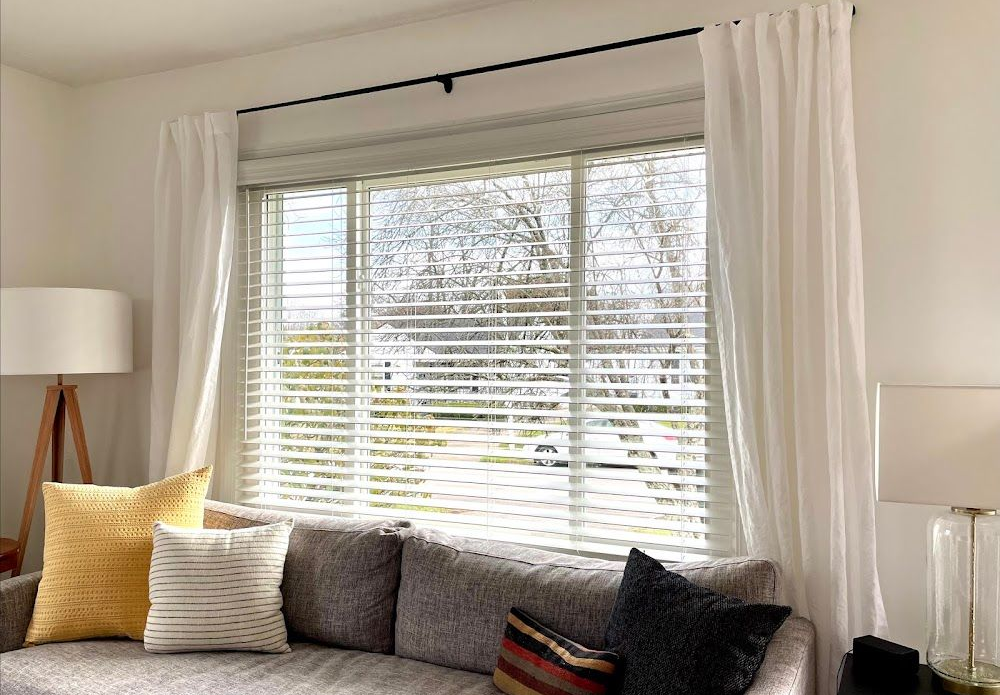
Layering works because shutters and curtains support different roles. Shutters handle everyday light control. Curtains shape the room’s tone, texture, and softness. When combined, the window treatment feels more complete, with depth and balance.
Plantation shutters sit neatly inside the frame. They look clean and architectural. Curtains frame the window from the outside, adding vertical height and flow. Together, they create both refinement and comfort — something neither treatment delivers alone.
How to Layer Them Effectively
Before choosing fabrics and placement, it helps to think about the purpose of the room and the kind of atmosphere you're aiming for. Below are common layering approaches, each serving a different need.
Shutters with Light, Airy Curtains
If the goal is to keep the room bright while softening the edges, pair shutters with sheer or lightweight curtains. The shutters manage privacy and glare throughout the day, while the curtains add visual calm and a sense of movement. This works especially well in living rooms, kitchens, and breakfast areas.
Shutters with Blackout or Lined Curtains
For bedrooms or media spaces, adding lined curtains can enhance coziness and nighttime control. The shutters still allow gentle daylight through during the day, while the curtains help create darkness when needed. This combination supports both rest and clarity during waking hours.
Shutters with Stationary Side Panels
Not every curtain needs to move. Sometimes the purpose of drapery is to frame the window, not cover it. Stationary panels on each side soften the architecture and make the window feel intentional. This approach works beautifully when shutters already provide full functional control.
How to Choose the Right Combination
Choosing the best pairing becomes easier when you consider how the room is used. Below is a simple decision guide to help narrow direction:
- Identify whether the room needs daytime brightness, nighttime privacy, or both.
- Decide whether you want curtains that move — or simply drapery panels that add style.
- Select fabrics based on atmosphere: lighter fabrics for airy, relaxed rooms; heavier fabrics for warmth and privacy.
- Place the curtain rod higher than the window frame to emphasize height and create a clean vertical flow.
When each layer has a purpose, the window doesn't feel dressed — it feels designed.
Real Home Example
A Lexington homeowner loved the natural light from their living room shutters but felt the space looked unfinished and too open at night. Rather than removing the shutters, we added long, soft drapery panels hung above the frame line. The room instantly felt warmer and more welcoming. The shutters continued to handle everyday lighting, and the curtains grounded the space with texture and softness.
The window remained the feature — just more refined.
FAQs
- Do shutters and curtains ever compete visually?
They can, but only when curtains are too heavy or hung too low. Choosing appropriate fabric weight and hanging the rod higher keeps the look balanced. - Do curtains need to close if shutters already handle privacy?
Not necessarily. Many homeowners use stationary panels simply to frame and soften the window. - Should curtain fabric match the shutters?
No. It should complement the space. Shutters are structural; curtains are expressive. - Does this work in small rooms?
Yes — layered window treatments can make small rooms feel more finished and grounded rather than cluttered.
Conclusion
Shutters and curtains don’t replace one another — they elevate each other. Shutters create clarity and control. Curtains create atmosphere and depth. Together, they allow light, comfort, privacy, and design to coexist in one intentional layering strategy.